What types of biodegradable materials can the biodegradable film blow molding machine process?
Yes, biodegradable materials typically have high viscosity. However, our biodegradable film blow molding machine is specifically designed with screws and die heads adapted for high-viscosity materials, ensuring a smooth melting process and preventing blockages and uneven production.
Does the production of biodegradable film encounter issues with material viscosity?
It supports various biodegradable plastics, including PLA (polylactic acid), PBAT (polybutylene adipate terephthalate), PHA (polyhydroxyalkanoates), and others. Users can select different biodegradable materials based on their specific needs for production.
How is the strength and transparency of the film ensured during production?
The equipment is equipped with precise temperature control and airflow control systems, enabling effective adjustment of film thickness, density, and transparency to ensure the final product meets the required strength and appearance standards.
Is the machine environmentally friendly and compliant with relevant regulations?
Yes, the biodegradable film blow molding machine uses a solvent-free production process, reducing the use of chemical solvents, and is equipped with an exhaust gas treatment system, compliant with domestic and international environmental regulations, helping enterprises achieve green production goals.
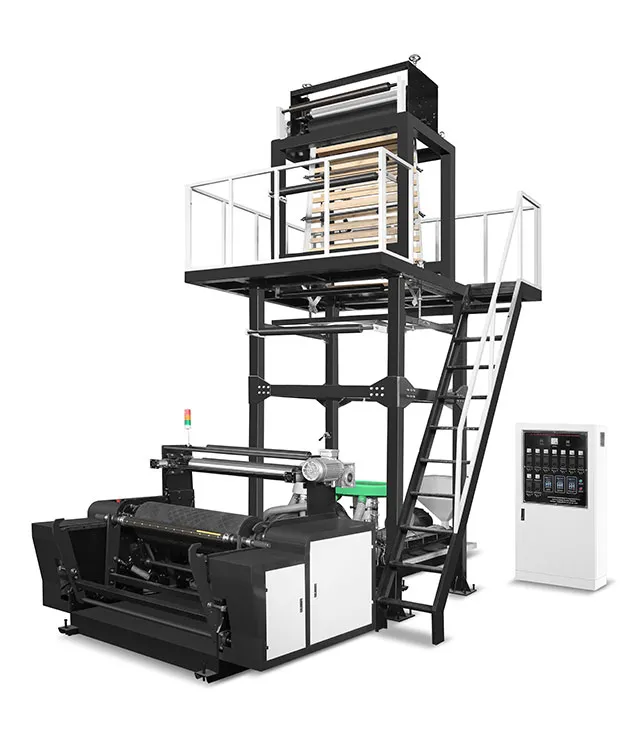
What biodegradable materials can RUIPAI biodegradable blown film machine process?
RUIPAI’s machine supports a wide range of biodegradable materials, including PLA (polylactic acid), PBAT (polybutylene adipate terephthalate), PHA (polyhydroxyalkanoates), starch-based composites, and PLA/PBAT blends. It can also handle modified biodegradable materials with additives (e.g., UV stabilizers, anti-block agents). The machine’s specialized screw design ensures smooth melting of high-viscosity biodegradable resins.
Which industries is RUIPAI biodegradable blown film machine suitable for?
It’s widely used in industries demanding eco-friendly packaging:
1. Food packaging (compostable shopping bags, fresh-keeping films);
2. Agriculture (biodegradable mulch films);
3. Daily chemicals (compostable detergent pods packaging);
4. Disposables (biodegradable gloves, garbage bags);
5. Medical (disposable sterile packaging). It’s ideal for enterprises aiming to achieve green production and meet consumer eco-demand.
What is the production capacity of RUIPAI biodegradable blown film machine?
RUIPAI biodegradable blown film machine has a maximum extrusion output of 120kg/h for standard models. Customizable capacity ranges from 30kg/h (entry-level, suitable for small businesses) to 120kg/h (high-capacity, for large-scale production).
What is the maximum film width and thickness range of the machine?
The standard maximum roller width is 1300mm. Film thickness ranges from 0.01mm (ultra-thin packaging films) to 0.1mm (thick mulch films). This flexibility allows it to match diverse packaging sizes—from small food sachets to large agricultural mulch rolls.
What is the maintenance cycle of RUIPAI biodegradable blown film machine?
The machine has a long maintenance cycle thanks to high-wear-resistant components and optimized cooling systems. Routine maintenance includes:
1. Daily cleaning of the die head and air ring;
2. Weekly lubrication of moving parts;
3. Monthly inspection of screws and sensors. Major maintenance (screw/barrel replacement) is only needed every 4-6 years, minimizing downtime.
Can the machine produce biodegradable films with anti-UV or anti-block functions?
Yes, RUIPAI can customize the machine to add these functions. For anti-UV films, we integrate a UV stabilizer mixing system and optimize die head design; for anti-block films, we adjust the screw’s mixing section and add anti-block masterbatch feeding. These customized films are widely used in outdoor agricultural mulch and long-term storage packaging.


 English
 Español