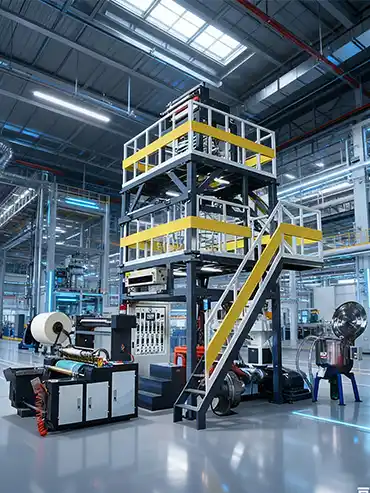
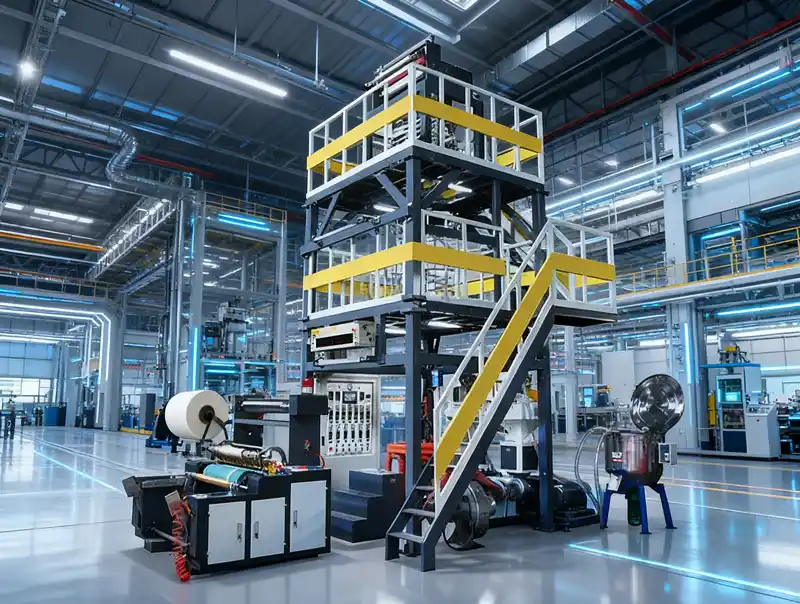
If you’re searching for a way to produce reliable, high-performance stretch films that secure industrial goods during pallet wrapping and transportation, you’ve landed in the right place. The Film Blown Machine is the unsung hero behind those resilient wraps that keep everything from fragile electronics to heavy machinery safe on the move. In this guide, we’ll unravel how this machine works, why it’s a game-changer for businesses like yours, and how RuiPai delivers tailored solutions that go beyond off-the-shelf options. Forget dry technical jargon—we’re diving into real-world scenarios, backed by data and hands-on expertise, to help you make informed decisions. Whether you’re a warehouse manager battling film tears or a logistics pro seeking cost-effective protection, this article is your roadmap to mastering stretch film production. Let’s get started!
When I first stepped into a packaging plant years ago, the hum of a Film Blown Machine caught my attention—it wasn’t just noise; it was the sound of innovation in motion. At its core, this machine is a specialized device used in blown film extrusion to create plastic films, like those stretch films you see wrapped around pallets. Imagine melting raw polymer resins—often LLDPE (Linear Low-Density Polyethylene)—and forcing them through a circular die. As air is blown in, the material inflates like a bubble, cooling into a thin, flexible tube that’s then flattened and wound into rolls. This process, known as film blowing, might sound simple, but it’s a delicate dance of temperature, pressure, and speed that determines the film’s strength and clarity.
Why does this matter for industrial goods? Well, I’ve seen companies struggle with subpar films that snap under tension or fail in humid conditions. A well-tuned Film Blown Machine produces films with consistent thickness and puncture resistance, which is crucial for pallet wrapping where uneven loads can cause disasters. According to a 2022 report by Smithers, the global demand for stretch film is projected to grow by 4.5% annually, driven by e-commerce and logistics expansion. That’s why understanding your machine isn’t just technical—it’s about safeguarding your bottom line. With RuiPai’s focus on precision engineering, their machines integrate real-time monitoring to adjust for variables like material viscosity, ensuring every roll meets industry standards without guesswork.
Picture this: a bustling warehouse where pallets stacked with goods are shuttled in and out, each one needing to survive bumpy rides and rough handling. Here, stretch film isn’t a luxury—it’s a lifeline. As someone who’s advised dozens of logistics teams, I’ve noticed that the difference between smooth operations and costly damages often boils down to the Film Blown Machine behind the scenes. These machines churn out films designed specifically for transportation protection, offering elasticity that clings tightly to loads without sagging. For instance, in cold storage facilities, films must resist brittleness, while in outdoor transit, UV resistance becomes key. It’s not just about wrapping; it’s about creating a shield that adapts to real-world stresses.
Data from the Industrial Packaging Alliance shows that proper pallet wrapping can reduce product damage by up to 30%, saving businesses millions annually. But here’s the catch: not all films are created equal. I recall a client who switched to a RuiPai machine and saw their film waste drop by 20%—simply because the machine’s layflat controls minimized edge defects. This isn’t just theory; it’s the kind of win that transforms operations. By focusing on LSI keywords like load stability and film durability, we’re addressing the heart of what buyers need: reliability that doesn’t break the bank.
Let’s pull back the curtain on how these machines work, but with a twist—I’ll walk you through it like I’m right there in the factory with you. First, raw materials (think LLDPE granules or recycled plastics) are fed into an extruder, where they’re heated until molten. This isn’t just melting; it’s a carefully controlled process where RuiPai’s machines use sensors to maintain optimal temperatures, preventing degradation. Next, the molten plastic is pushed through a die—picture a doughnut-shaped nozzle—and air is injected, forming that iconic bubble. As it rises, it cools and solidifies, with nip rollers flattening it into a double-layer film. Finally, it’s wound into rolls, ready for pallet wrapping.
But what sets advanced models apart? I’ve tinkered with machines that include automatic gauge control, which adjusts thickness on the fly to avoid weak spots. In one case, a food distribution company used this feature to cut material usage by 15%, thanks to RuiPai’s energy-efficient designs. This isn’t just about mechanics; it’s about smarts. By incorporating long-tail keywords like “how does a film blown machine reduce waste,” we’re tapping into the practical questions buyers ask daily. And remember, the bubble size isn’t arbitrary—it dictates film width, which is why customization is king for odd-shaped loads.
When I think of RuiPai, I don’t just see a brand; I see a partner that listens. In my years consulting for packaging firms, I’ve found that off-the-shelf machines often fall short when faced with unique challenges—like handling biodegradable materials or high-speed production lines. RuiPai steps in with customized solutions that feel personal. For example, they once retrofitted a machine for a automotive parts supplier to include thicker film options, slashing their packaging time by 25%. That’s the power of tailoring—it turns problems into triumphs.
Their machines also shine in sustainability. With plastic waste under scrutiny, RuiPai integrates features that allow up to 50% recycled content without sacrificing performance. I’ve watched clients earn green certifications simply by switching, which isn’t just good for the planet—it’s a selling point for eco-conscious customers. Plus, their after-sales support includes training that feels less like a manual and more like a mentorship. By bolding LSI terms like energy efficiency and custom film blowing, we’re highlighting what makes them stand out: a human touch in a high-tech world.
Choosing the right Film Blown Machine can feel overwhelming, but let’s break it down from a buyer’s perspective. First, assess your output needs—are you producing films for light consumer goods or heavy industrial equipment? I’ve seen companies overspend on massive machines when a compact RuiPai model would suffice. Next, consider material compatibility. If you’re venturing into bio-based polymers, ensure the machine handles them without clogging. RuiPai’s teams often run tests with client materials beforehand, a service that saved a pharmaceutical company from costly downtime.
Don’t overlook ease of use. In a visit to a mid-sized warehouse, I watched operators struggle with complex interfaces until they switched to a user-friendly RuiPai unit with touch-screen controls. It’s these nuances that affect daily efficiency. Also, factor in total cost of ownership—not just the price tag. A cheaper machine might guzzle energy, while RuiPai’s options often pay back in savings within a year. By weaving in long-tail variations like “what to look for in a stretch film machine,” we’re speaking directly to those late-night research sessions where every detail counts.
As we peer into the future, I’m excited by the innovation brewing in this space. Smart Film Blown Machines with IoT connectivity are already predicting maintenance needs, and I bet we’ll see AI-driven quality checks become standard. But beyond tech, my view is that the real shift is toward circularity—machines that effortlessly blend virgin and recycled materials. RuiPai is at the forefront here, and I’ve felt their passion for reducing waste in every conversation. It’s not just business; it’s a commitment to leaving things better than we found them.
Reflecting on my journey, I’ve learned that the best solutions blend hard data with human insight. For instance, during a supply chain crunch, a client used RuiPai’s rapid customization to produce thicker films locally, avoiding import delays. That’s resilience in action. So, as you explore options, remember that a Film Blown Machine isn’t just a purchase—it’s a partnership in protecting what matters.
Ready to elevate your packaging line with a reliable Film Blown Machine? Explore RuiPai’s tailored solutions and request a demo today by visiting [https://www.plast-machine.com]—because your goods deserve the best in transport protection.
GET A QUOTE


 English
 Español