You're setting up a plastic recycling operation, and the conventional wisdom says you need a shredder, a separate extruder, and a pelletizer—three machines, three operators, and a lot of floor space. A Plastic Pelletizing Machine designed as a single-stage system challenges that assumption. It combines shredding, melting, filtering, and pelletizing into one continuous operation, reducing the footprint by half and eliminating the handling between stages. This article explains how single-stage recycling works, what output and material flexibility it delivers, and what to verify before choosing an integrated system for your facility.
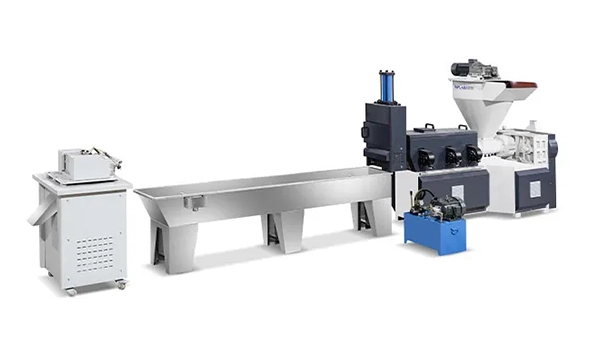
A one-stage plastic recycling machine—also called a single-step recycling extruder—processes plastic waste into reusable pellets or granules in a single continuous operation. Instead of running material through a shredder, then transferring it to an extruder, then feeding the melt to a pelletizer, the entire sequence happens inside one machine. The RP-BR100 combines shredding, melting, filtering, and pelletizing into one compact system. The screw diameter is Φ100mm, with an L/D ratio of 20:1 to 22:1. The main motor is 22kW, and the maximum extrusion output is 95kg/h. The machine weighs 2.1 tons and measures 8200×1600×1800mm. Because there's no intermediate handling, there's no material loss between stages, no waiting for the shredder to catch up, and no separate operator managing the transfer.
The machine accepts plastic waste directly and shreds it before melting. This eliminates the need for a separate crusher and the feeding inconsistencies that come with transferring shredded material between machines. The result is a steadier feed and more consistent melt quality.
After melting, the polymer passes through a filtration stage to remove contaminants, then moves directly to the pelletizing head. The entire sequence—from waste plastic to finished pellet—happens without the material leaving the machine. This reduces exposure to moisture and contamination between stages.
Floor space is expensive. A multi-stage recycling line requires separate machines for shredding, extrusion, and pelletizing, each with its own footprint and clearance requirements. The single-stage design reduces the footprint by approximately 50%. That's not just a real estate saving—it's a simplification of the entire production layout. With fewer machines, you have fewer power drops, fewer material transfer points, and a shorter distance for material to travel. For small to medium-sized recycling operations, this compact design makes it feasible to install a complete recycling line in a space that would otherwise be too small.
Every transfer between machines requires labor. Someone has to move material from the shredder to the extruder, monitor the feed, and manage the pelletizer. The integrated system eliminates those intermediate handling steps. The machine runs with minimal operator intervention, reducing labor costs and freeing staff for other tasks.
A multi-stage line requires careful alignment and synchronization between separate machines. The single-stage system arrives as one unit. Setup is faster, commissioning is simpler, and the learning curve for operators is shorter. This is especially valuable for facilities that need to start production quickly or that don't have dedicated engineering staff.
The RP-BR100 processes a range of plastic waste types, including PE, PP, and PVC. The machine's adaptability means it can handle diverse waste plastic recycling needs without requiring different setups for each material. The maximum extrusion output is 95kg/h, with the screw rotating at 10-100 r/min. For higher output requirements, the series includes larger models: the RP-BR110 with a Φ110mm screw and 120kg/h output, and the RP-BR120 with a Φ120mm screw and 135kg/h output.
| Parameter | RP-BR100 | RP-BR110 | RP-BR120 |
|---|---|---|---|
| Screw Diameter | Φ100mm | Φ110mm | Φ120mm |
| Screw L/D Ratio | 20:1-22:1 | 20:1-22:1 | 20:1-22:1 |
| Screw Rotation | 10-100 r/min | 10-100 r/min | 10-100 r/min |
| Main Motor Power | 22kW | 30kW | 37kW |
| Max. Extrusion Output | 95kg/h | 120kg/h | 135kg/h |
| Machine Weight | 2.1t | 2.2t | 2.5t |
| Overall Dimension | 8200×1600×1800mm | 8500×1600×1800mm | 8800×1600×1800mm |
The machine handles the most common thermoplastic waste streams. PE film, PP woven bags, and PVC profiles can all be processed into reusable pellets. This material flexibility allows a single machine to serve multiple recycling applications.
The 95kg/h output of the RP-BR100 suits small to medium-sized recycling operations and pilot production. For larger facilities, the RP-BR110 and RP-BR120 provide higher output without changing the fundamental single-stage architecture.
The advantages of a single-stage system over a multi-stage line are practical and measurable. Multi-stage recycling requires more floor space, more labor, and more setup time. The integrated system eliminates those costs.
Space-saving — compact design with approximately 50% smaller footprint
Lower labor and costs — no intermediate handling between stages
Faster setup — plug-and-play operation with minimal commissioning time
Reduced material loss — no transfer points where material can be lost or contaminated
Simpler maintenance — fewer machines to service and fewer wear points
Single-stage recycling works best for clean, dry scrap and for operations where space and labor are constraints. For heavily printed, moist, or contaminated material, a two-stage system with an additional degassing and filtration step may be more appropriate. The single-stage design is the practical choice when the waste stream is relatively clean and the priority is efficiency and simplicity.
The machine is designed for easy cleaning, with key components such as screws and molds being easy to disassemble and clean. Daily maintenance is straightforward, significantly reducing downtime and repair time.
The machine processes PE, PP, PVC, and other thermoplastics with strong adaptability to meet diverse waste plastic recycling needs.
The equipment is relatively easy to operate, featuring a touchscreen interface. Ordinary operators can operate it after basic training. However, regular training is recommended to ensure operational efficiency and safety.
Yes. The machine can adjust production capacity according to needs, making it suitable for both large-scale production and small to medium-sized enterprises or pilot production.
The equipment is designed for easy cleaning, with key components such as screws and molds being easy to disassemble and clean. Daily maintenance is straightforward, significantly reducing downtime and repair time.
A Plastic Pelletizing Machine in a single-stage design combines shredding, melting, filtering, and pelletizing in one compact system—cutting space, labor, and setup time. The RP-BR100 One Stage Plastic Recycle Machine from PLAST MACHINE delivers Φ100mm screw diameter, 95kg/h maximum output, 22kW main motor, L/D 20:1-22:1, and a footprint approximately 50% smaller than multi-stage lines. Contact PLAST MACHINE for a one-stage recycling configuration assessment → their team can help you select the right model and output capacity for your specific plastic waste stream and production targets.
Environmentally friendly materials
Integrated production lines
Maximising your return on investment
GET A QUOTE


 English
 Español