You're comparing flexo presses for a flexible packaging operation, and the spec sheet lists a chamber doctor blade system. Is that a meaningful difference, or just another line item? A Printing Machine that uses a chamber doctor blade delivers consistent ink metering, reduced solvent evaporation, and less waste than open fountain systems. The RP-M series mid-speed stack type flexo press from RUIPAI was built around this ink delivery architecture. This article explains what a chamber doctor blade actually does, how it pairs with ceramic anilox rollers to maintain color consistency at 80m/min, and what to consider when matching a mid-speed press to your production demand.
When you're evaluating a mid-speed press, start with web width, print length range, and plate thickness compatibility. These determine which jobs the machine can accept and how efficiently it runs them. The web width options define the maximum sheet or roll size you can process. Print length range determines the repeat sizes available for different packaging formats. And plate thickness must match the flexo plates you already use or plan to use. The RP-M series offers web widths of 600mm, 800mm, and 1000mm, with print widths of 560mm, 760mm, and 960mm. Print length ranges from 191mm to 914mm, covering most flexible packaging formats. The press uses 2.38mm plate thickness — the industry standard — so you can use standard flexo plates without special ordering.
The RP-M600 handles up to 600mm web and 560mm print width, the RP-M800 handles 800mm web and 760mm print width, and the RP-M1000 handles 1000mm web and 960mm print width. This range covers narrow to wide flexible packaging formats, letting you match the press to your typical order mix without over-specifying.
The press uses 2.38mm plate thickness, compatible with standard flexo plates. Color station configurations include 4, 6, or 8 printing colors, depending on the complexity of your designs. More colors allow for spot colors and extended gamut work.
In a stack-type press, the printing units are arranged vertically rather than horizontally. This design saves floor space compared to in-line presses and provides easier access to each print station for plate changes and maintenance. The web path is short and direct, which helps maintain registration stability and reduces tension variation between stations. If your production schedule consists primarily of short to medium runs with frequent changeovers, a mid-speed press may actually deliver better overall throughput than a high-speed machine. The high-speed press spends more time accelerating and decelerating during changeovers; the mid-speed press reaches its rated speed faster and maintains it with less complexity.
Vertical arrangement means the web travels a shorter, more direct path between printing stations. This reduces the opportunity for tension variation to accumulate, which helps maintain registration. It also means each station is accessible from the same side of the press, simplifying plate changes and inspection.
A short web path keeps the substrate under consistent tension from unwind to rewind. The PLC-controlled tension system maintains stable web tension regardless of roll diameter changes or speed variations. The result is consistent registration across the full run.
| Parameter | RP-M600 | RP-M800 | RP-M1000 |
|---|---|---|---|
| Max. Web Width | 600mm | 800mm | 1000mm |
| Max. Printing Width | 560mm | 760mm | 960mm |
| Printing Length | 191-914mm | 191-914mm | 191-914mm |
| Printing Speed | 80 m/min | 80 m/min | 80 m/min |
| Plate Thickness | 2.38mm | 2.38mm | 2.38mm |
| Printing Colors | 4, 6, 8 | 4, 6, 8 | 4, 6, 8 |
| Anilox Roller | Ceramic, laser-engraved | Ceramic, laser-engraved | Ceramic, laser-engraved |
| Doctor Blade | Chamber type | Chamber type | Chamber type |
| Drying System | Electric heating | Electric heating | Electric heating |
| Control System | PLC with touch screen | PLC with touch screen | PLC with touch screen |
The table shows how web width and print width pair across the three models. The RP-M600 handles up to 600mm web and 560mm print width, the RP-M800 handles 800mm web and 760mm print width, and the RP-M1000 handles 1000mm web and 960mm print width.
All three models share the same PLC touch screen control system, electric heating drying, and ceramic laser-engraved anilox rollers. The chamber doctor blade system is standard across the range.
An open fountain system exposes ink to air, allowing solvent to evaporate and viscosity to drift. The chamber system encloses the ink, maintaining consistent viscosity and reducing the need for operator adjustments. For converters running long production runs, this consistency directly translates to less waste and more predictable color matching. Ceramic anilox rollers are laser-engraved with precise cell patterns that hold and transfer ink uniformly. Unlike chrome rollers, which wear and lose cell volume over time, ceramic rollers maintain their specifications through millions of impressions. The result is color consistency that doesn't drift as the press ages.
The chamber doctor blade seals ink around the anilox roller, ensuring uniform cell filling and transfer. It minimizes solvent evaporation, keeps viscosity stable, and reduces ink waste. Open fountain systems require more frequent operator attention and produce less consistent results over long runs.
Ceramic rollers resist wear from abrasive pigments and maintain their cell volume far longer than chrome rollers. This means your color density stays stable over years of production—not just the first few months. The laser-engraved cell pattern is precisely controlled for uniform ink release.
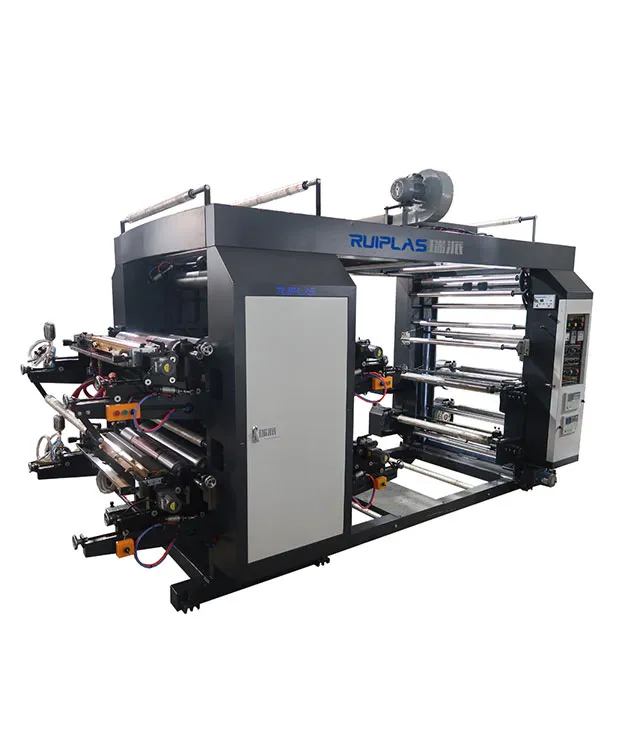
Flexible packaging and food pouches require consistent print quality and reliable production. The chamber doctor blade and ceramic anilox system deliver the ink control these applications demand, at a speed that matches typical converting line requirements. Woven polypropylene sacks and industrial bags benefit from the press's ability to handle heavier substrates. The 80m/min speed and 1000mm web width option accommodate the larger formats used in these applications. Paper labels, tags, and paper-based packaging are well within the machine's capability. The 2.38mm plate thickness is compatible with standard flexo plate materials, and the 191-914mm print length range covers most label and tag formats.
Food pouches and snack wrappers need consistent color and reliable output. The RP-M series delivers both, with the chamber doctor blade maintaining ink viscosity and the ceramic anilox roller ensuring uniform ink transfer.
Woven PP sacks and industrial bags are thicker and more abrasive than films. The RP-M series handles them at 80m/min with the 1000mm web width option, maintaining registration and print quality on these demanding substrates.
Paper labels and tags use the same 2.38mm plate thickness as film jobs, so changeover between substrates is straightforward. The print length range covers standard label repeats.
The primary difference is production speed. Mid-speed models run at 80m/min; high-speed models reach 120m/min. The high-speed models may also include additional automation features such as non-stop roll changes and more advanced tension control systems. For operations where 80m/min meets production targets, the mid-speed press offers a lower capital cost and simpler operation.
The press supports 4, 6, or 8 printing colors, depending on configuration. Routine maintenance includes cleaning the chamber and doctor blade after each production run, checking blade wear, and verifying anilox roller condition. The chamber system is designed for quick disassembly and cleaning, minimizing downtime between jobs.
A Printing Machine with 80m/min mid-speed capability, 600-1000mm web widths, and chamber doctor blade plus ceramic anilox roller is the practical choice for converters who need consistent flexo quality without the capital cost of a high-speed line. The RP-M series from RUIPAI delivers 80m/min production speed, 600/800/1000mm web width options, 191-914mm printing length range, 2.38mm plate thickness compatibility, 4/6/8 color configurations, and a compact stack-type footprint.
Whether you're producing food packaging, woven industrial bags, labels, or paper packaging, this Printing Machine offers the speed, flexibility, and print consistency that modern converting operations demand. With a chamber doctor blade and ceramic anilox roller system, it maintains color quality across long production runs.
Contact RUIPAI for a mid-speed flexo press configuration assessment → their team can help you select the right web width, color count, and options for your specific substrates and production targets. Get a Printing Machine that matches your actual demand — without paying for speed you don't need.
Environmentally friendly materials
Integrated production lines
Maximising your return on investment
GET A QUOTE


 English
 Español