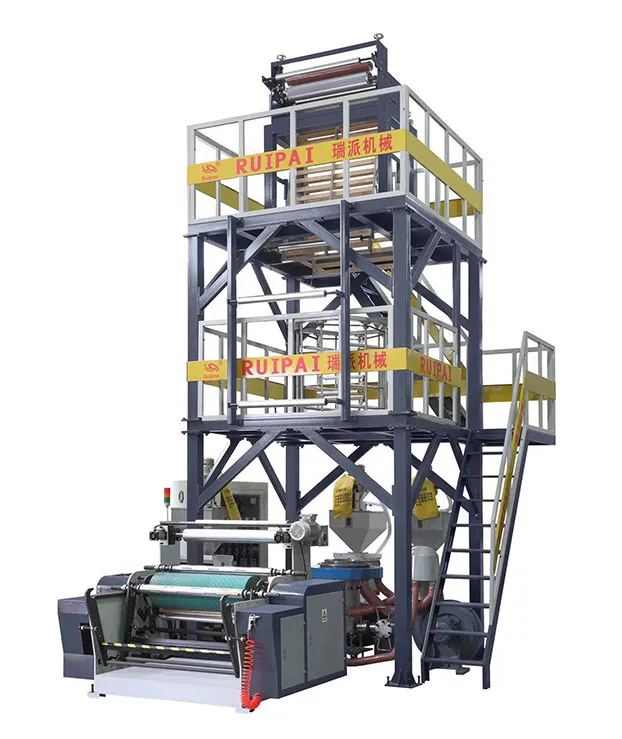
You're running a packaging film line, and the cost of a single high-performance resin is eating into your margin. A Film Blown Machine in the AB configuration splits the film into two layers — each fed by its own extruder, each carrying a different material. One layer can provide strength or barrier, the other can carry a lower-cost resin, and the two meet inside the die head as a single asymmetric film. The RP-2L series from Ruipai runs this configuration across film widths from 200mm to 2000mm, with thickness from 0.01mm to 0.1mm. This article explains how the AB structure works, what each screw contributes, and what to verify when you're specifying a two-layer line for packaging or agricultural film.
An AB film has two distinct layers: an A layer and a B layer. The structure is asymmetric — the surface on the A side is not the same as the surface on the B side. That asymmetry is the point. If you need a heat-seal layer on one side and a stiffness layer on the other, AB gives you that difference without adding a third extruder.
An ABA film has three layers with the same material on both outer surfaces. The B layer sits in the middle, sandwiched between two A layers. That symmetric structure is useful when the outer surfaces need identical properties, but it requires a three-layer die and a more complex flow path. AB simplifies the hardware and the layer management while still delivering the two-material benefit.
The A extruder feeds one side of the die, and the B extruder feeds the other. The two melt streams converge inside the die head and exit as a two-layer bubble. The layer ratio — how much of the total thickness is A and how much is B — is set by the relative extruder outputs and the die geometry.
That ratio matters for cost and performance. A thin A layer of high-performance resin over a thicker B layer of commodity resin can deliver the surface properties you need without paying for high-performance resin through the full thickness.
The AB line uses two extruders. On the RP-2L800, the screw diameter is A:50mm and B:50mm. On the larger RP-2L1200, the screws are A:60mm and B:55mm; the RP-2L1500 uses A:65mm and B:60mm; and the RP-2L2000 uses A:80mm and B:70mm. The screw L/D ratio is 30:1 across the standard models.
Separate extruders mean you can run different materials in each layer without cross-contamination. You can also set different screw speeds and temperature profiles for A and B, which is useful when the two resins have different melt behaviors. A polyolefin and a barrier resin do not process identically, and separate screws let you tune each one independently.
The main power is split between the two extruders: 15+15 kW on the RP-2L800, 22+18.5 kW on the RP-2L1200, 30+22 kW on the RP-2L1500, and 45+37 kW on the RP-2L2000. That split drive is what allows the layer ratio to be adjusted without changing the total output. If you need more of the A material on the surface, you increase the A screw speed; if you need more core material, you increase the B screw speed.
| Parameter | RP-2L800 | RP-2L1200 | RP-2L1500 | RP-2L2000 |
|---|---|---|---|---|
| Film thickness | 0.01–0.1mm | 0.01–0.1mm | 0.01–0.1mm | 0.01–0.1mm |
| Film width | 200–800mm | 300–1200mm | 500–1500mm | 800–2000mm |
| Roller width | 900mm | 1200mm | 1600mm | 2200mm |
| Max. output | 120kg/h | 150kg/h | 180kg/h | 240kg/h |
| Screw diameter | A:50 B:50 | A:60 B:55 | A:65 B:60 | A:80 B:70 |
| Screw L/D | 30:1 | 30:1 | 30:1 | 30:1 |
| Main power | 15+15 kW | 22+18.5 kW | 30+22 kW | 45+37 kW |
| Die head diameter | 180mm | 250mm | 350mm | 450mm |
| Take-up speed | 100m/min | 100m/min | 100m/min | 80m/min |
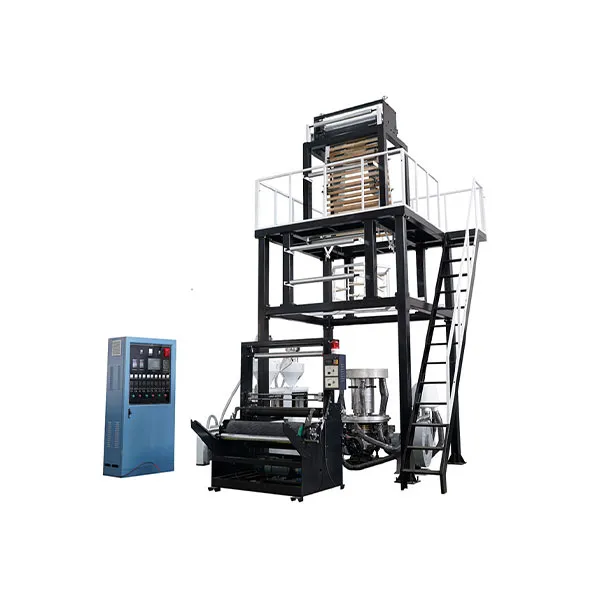
The AB configuration handles the polyolefin family — LDPE, LLDPE, HDPE, and blends of those resins. It can also run biodegradable materials where the layer structure supports the degradation profile. The choice of A and B materials depends on the film's target function: barrier, toughness, sealability, or cost reduction.
The film thickness range is 0.01–0.1mm across the standard models. That covers the thin films used in food packaging, daily chemical products, and electronic product protection. Agricultural films — mulch film, greenhouse film, silage film — also fall within this thickness window.
The film width range starts at 200–800mm on the RP-2L800 and scales to 800–2000mm on the RP-2L2000. Maximum output runs from 120kg/h on the smallest model to 240kg/h on the largest. The take-up speed is 100m/min on the three smaller models and 80m/min on the RP-2L2000, where the wider film and larger die require a slightly lower line speed to maintain bubble stability.
The die head diameter also scales with the model: 180mm, 250mm, 350mm, and 450mm. A larger die produces a larger bubble, which translates to a wider film. The die diameter and the film width range are matched, so the bubble is neither over-inflated nor under-inflated at the target width.
The AB film is used in food packaging, daily chemical products, and electronic products. In food packaging, one layer can provide the moisture barrier while the other provides the seal layer. In daily chemical packaging, one layer can carry the print surface while the other provides strength. In electronics, the film can serve as a protective wrap or a release liner with different surface properties on each side.
The common thread is an application where the two surfaces of the film do different jobs. A single-layer film would have to compromise between those jobs. The AB structure lets each layer be optimized for its specific function.
The AB structure is also used in agricultural film — mulch film, greenhouse film, and water bags. In these applications, the cost advantage of putting lower-cost resin in one layer while keeping a functional resin on the other surface is the primary driver. The film width up to 2000mm on the RP-2L2000 matches the bed widths used in large-scale agricultural film production.
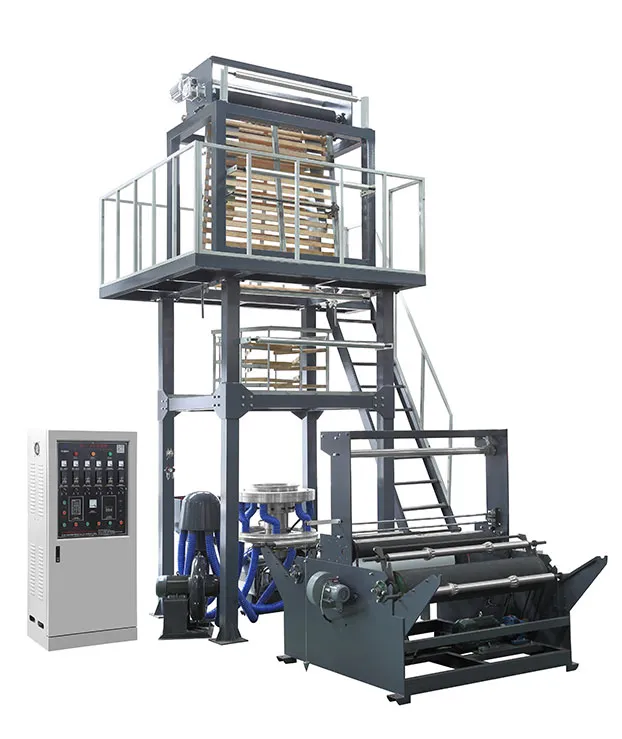
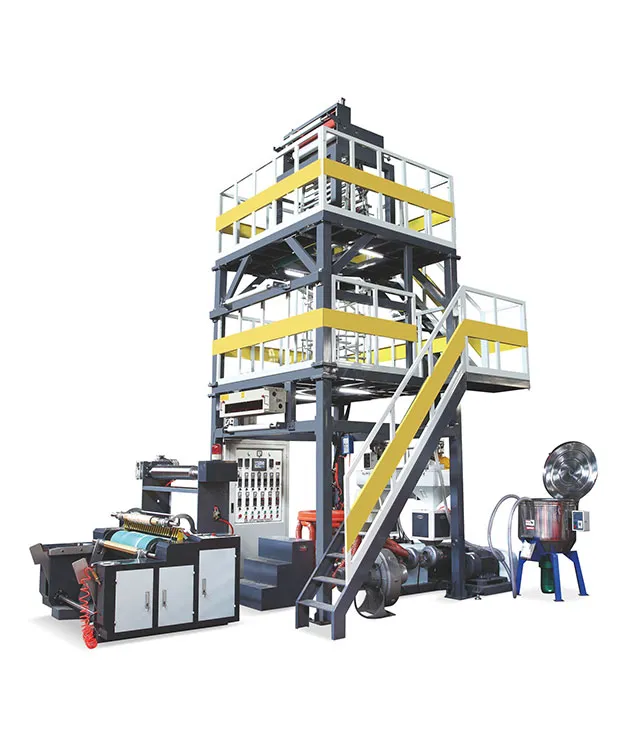
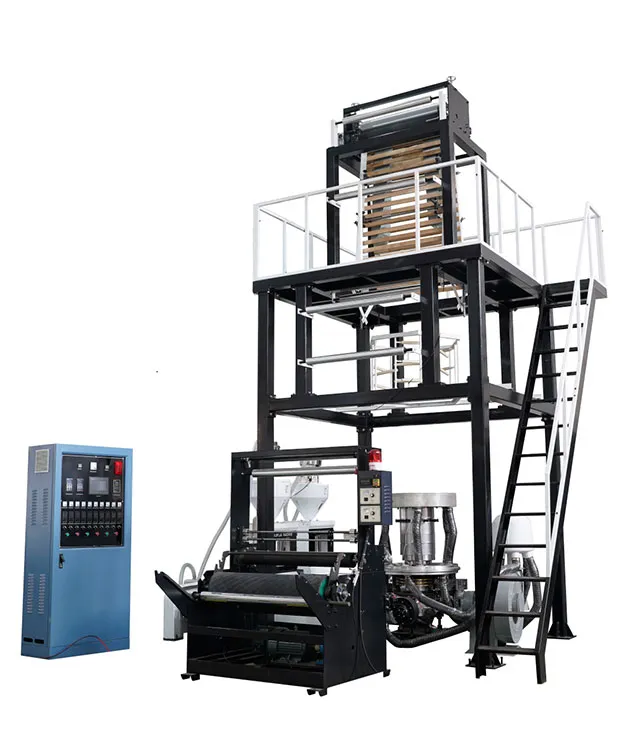
A Film Blown Machine in the AB configuration like the RP-2L series from Ruipai also supports optional equipment that extends the line's capability: a rotary die head, corona treatment, and an auto loader. The corona treater is useful when the film needs surface energy for printing or lamination, and the auto loader reduces manual resin handling.
Match the film width range to your target finished width. The RP-2L800 covers 200–800mm, the RP-2L1200 covers 300–1200mm, the RP-2L1500 covers 500–1500mm, and the RP-2L2000 covers 800–2000mm. Running at the extreme edge of a model's range leaves little room for width adjustment. If your target width sits near the top of one model's range and near the bottom of the next, the larger model gives more operating margin.
The layer ratio is set by the relative outputs of the A and B extruders and the die geometry. The separate screw drives allow independent speed adjustment, so the ratio can be tuned within the mechanical limits of the die and the extruders. Confirm the achievable ratio range with the manufacturer for your specific material pair, because the viscosity difference between the two resins affects how they distribute inside the die.
Clean the die head flow channels when changing materials to prevent cross-contamination between layers. Check the screws and barrels for wear, especially on the B extruder if it runs filled or abrasive compounds. Inspect the bubble cooling air ring for blockages that could cause thickness variation. Verify the take-up and winder tension control, because the asymmetric film may behave differently from a symmetric film during winding.
The rotary die head is useful if you need to adjust the die gap without stopping the line. Corona treatment is essential if the film will be printed or laminated, because the polyolefin surface has low surface energy without treatment. The auto loader reduces labor and keeps the hopper supply consistent. Specify these options at the order stage rather than retrofitting them later.
AB film has two layers — one A and one B — with different materials on the two surfaces. ABA film has three layers, with the same material on both outer surfaces and a different material in the core. AB is simpler and requires two extruders; ABA requires three extruders and a three-layer die. AB is the better fit when the two surfaces need different properties and a symmetric structure is not required.
It depends on the layer. The B layer, which is often the core or the non-functional side, can carry a higher percentage of recycled resin than the A layer. The A layer, which provides the surface properties, may need virgin or high-quality resin to maintain printability or seal strength. Test the recycled blend on the actual line before committing to a production ratio.
Thickness is controlled by the combination of screw speed, die gap, bubble inflation ratio, and take-up speed. The machine's thickness control system monitors the film and adjusts the parameters to hold the target. The 0.01–0.1mm range is the operating window; within that window, the control system maintains uniformity across the film width.
Delamination between the A and B layers usually comes from incompatible resins or insufficient adhesion at the interface. The two materials must have enough chemical affinity or a tie layer to bond. If the layers separate, check the material pair and the die temperature profile. The die temperature has to be high enough to promote interfacial bonding without degrading either resin.
A Film Blown Machine in the AB configuration should match your layer functions, film width, and output target — not the other way around. The AB 2 Layer Co-extrusion Film Blowing Machine RP-2L series from Ruipai runs 0.01–0.1mm thickness across 200–2000mm film widths, with separate A and B extruders, 30:1 screw L/D, and outputs from 120kg/h to 240kg/h. The asymmetric two-layer structure supports food packaging, daily chemical, electronics, and agricultural film applications, with optional rotary die head, corona treatment, and auto loader. If you're specifying a two-layer line for cost-driven or function-driven film production, send us your layer function and target width — we'll help you confirm the right model and screw configuration before you order.
Environmentally friendly materials
Integrated production lines
Maximising your return on investment
GET A QUOTE


 English
 Español