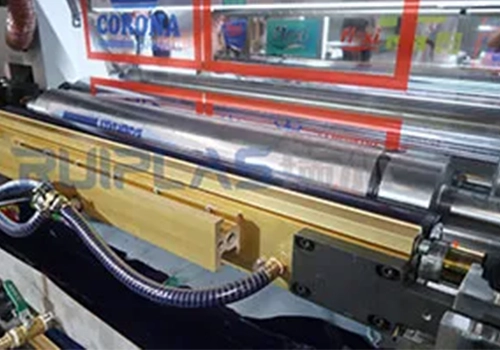
You're running a packaging operation, and the printing press needs to deliver the same sharp image on the 10,000th impression as it did on the first. A printing machine that drifts in registration, ink density, or substrate handling creates waste that compounds quickly. The RP series normal flexo printing machine was engineered for consistency: a chamber doctor blade and ceramic anilox roller system that meters ink precisely every cycle, a printing speed of 5-50 m/min that adapts without sacrificing quality, and web widths from 600mm to 1000mm that accommodate diverse substrates. This article walks through what makes this press capable of consistent output—from the ink delivery system that eliminates variability to the versatile substrate handling that keeps production running.
Q: What makes the chamber doctor blade system better than conventional ink trays?
A: The chamber doctor blade system encloses the anilox roller, delivering ink directly to the roller surface while the blade meters the exact amount. This closed system reduces solvent evaporation, keeps ink viscosity stable, and minimizes waste—all of which contribute to consistent print quality across long runs.
Q: Why does the anilox roller material matter for print consistency?
A: The press uses a ceramic anilox roller. Ceramic rollers offer superior wear resistance compared to chrome-plated rollers, maintaining their cell volume over longer periods. This means consistent ink transfer throughout the roller's service life—fewer replacements and more consistent print quality across production runs.
The RP series uses a chamber doctor blade and ceramic anilox roller system. This combination is the foundation of consistent print quality.
Open ink trays allow solvent evaporation, which changes ink viscosity and affects color consistency. The chamber doctor blade system encloses the ink, reducing evaporation and keeping viscosity stable. The result is consistent color from the beginning of the roll to the end—no gradual color shift that requires constant adjustment.
Anilox rollers have tiny cells that carry ink from the chamber to the plate. Over time, these cells wear down, reducing ink volume and changing print density. Ceramic anilox rollers resist wear better than chrome-plated rollers, maintaining cell volume over longer periods. This means consistent ink transfer and fewer roller replacements.
The RP series offers a range of web widths and printing lengths to accommodate different packaging formats.
The press is available in web widths of 600mm, 800mm, and 1000mm. This range covers narrow-web label applications through wider flexible packaging formats. Selecting the right width means you're not paying for capacity you don't need or squeezing jobs onto a press that's too narrow.
With a printing length of 191-914mm, the press covers a wide range of package formats—from small pouches and sachets to larger bags and sacks. This flexibility allows you to run different products without changing presses, reducing the need for multiple machines.
The RP series offers a printing speed of 5-50 m/min. This speed range provides flexibility for different production requirements.
At 5 m/min, the press can be run during setup and for short-run jobs where quality is prioritized over throughput. This reduces material waste during setup and allows for careful quality checks before running at full speed.
At 50 m/min, the press delivers the throughput needed for production runs. While not the highest speed in the flexo market, this speed is appropriate for converters who prioritize quality and versatility over maximum output—a practical choice for shops running diverse jobs rather than commodity production.
| Model | Max. Web Width | Max. Printing Width | Printing Length | Printing Speed | Plate Thickness | Overall Size (mm) |
|---|---|---|---|---|---|---|
| RP-2600 | 600mm | 560mm | 191-914mm | 5-50 m/min | 2.38mm | 2300×1600×2200 |
| RP-2800 | 800mm | 760mm | 191-914mm | 5-50 m/min | 2.38mm | 2100×1800×2200 |
| RP-21000 | 1000mm | 960mm | 191-914mm | 5-50 m/min | 2.38mm | 2100×2000×2200 |
| RP-4600 | 600mm | 560mm | 191-914mm | 5-50 m/min | 2.38mm | 4800×1600×2400 |
| RP-4800 | 800mm | 760mm | 191-914mm | 5-50 m/min | 2.38mm | 4800×1800×2400 |
| RP-41000 | 1000mm | 960mm | 191-914mm | 5-50 m/min | 2.38mm | 4800×2000×2400 |
The RP series is widely used in packaging industries due to its versatility, fast production speeds, and ability to print on various materials.
For converters producing food pouches, shrink sleeves, and flexible packaging, the press prints on a range of plastic films. The chamber doctor blade system ensures consistent ink transfer even on non-porous substrates where ink adhesion can be challenging.
For paper-based packaging—labels, bags, and cartons—the press delivers clean, sharp prints. The ceramic anilox roller provides the ink volume needed for solid coverage and fine details.
For industrial and agricultural packaging, the press handles woven fabric substrates. This versatility makes the RP series suitable for converters serving multiple market segments [0†L4-L5].
Q: What is the maximum web width of the RP series?
A: The series is available in 600mm, 800mm, and 1000mm web widths.
Q: What is the printing speed range?
A: The press runs at 5-50 meters per minute [0†L10].
Q: What printing technology does the press use?
A: The press features a chamber doctor blade and ceramic anilox roller system.
Q: What substrates can the press print on?
A: The press prints on plastic films, paper, and woven fabric.
Q: What is the plate thickness?
A: The plate thickness is 2.38mm.
A printing machine that combines consistent ink delivery, versatile substrate handling, and a practical speed range is the foundation of any reliable packaging operation. The RP series normal flexo printing machine from Ruipai delivers web widths from 600mm to 1000mm, printing lengths from 191mm to 914mm, and a chamber doctor blade and ceramic anilox roller system that ensures consistent ink transfer—all in a press designed for flexible packaging, paper, and woven fabric applications.
Whether you're printing plastic films, paper labels, or woven sacks, the RP series offers the versatility and reliability that packaging converters need. With multiple width options and a speed range that adapts to different job requirements, it's a practical solution for converters serving diverse market segments.
Contact Ruipai for a substrate-specific configuration → their team can help you select the right model width, anilox roller specification, and options for your specific materials and production targets. Get a printing machine that delivers consistent quality across every job.
Environmentally friendly materials
Integrated production lines
Maximising your return on investment
GET A QUOTE


 English
 Español