You're running a flexible packaging operation — producing food storage bags, garment covers, or consumer goods packaging. The market demands resealable bags that keep products fresh and provide consumer convenience. A bag making machine with ziplock attachment is designed for exactly this purpose — converting flat film into finished zipper bags in one continuous, automated process. This guide covers what a ziplock attachment bag making machine does, how zipper heat-sealing works, the key specifications that determine performance, and what to look for when selecting one for your production line.
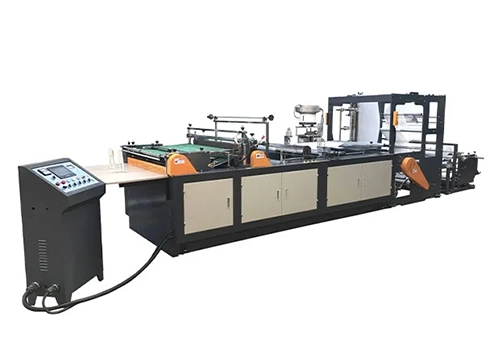
A ziplock attachment bag making machine takes flat film from a roll and transforms it into finished resealable bags in one continuous process. The film unwinds, passes through the zipper attachment station where the zipper profile is heat-sealed onto the film, and then moves through sealing and cutting stations to produce finished bags. The zipper attachment system feeds and positions the zipper profile precisely, while heat-sealing units bond it to the film. This integrated process eliminates separate handling steps, reduces labor, and ensures consistent zipper placement across every bag.
The zipper profile is fed from a roll and guided into position between layers of film. Heat-sealing units bond the zipper to the film. The film then moves through sealing and cutting stations to produce finished bags. All operations are synchronized through a PLC control system that maintains precise timing and temperature control.
The machine operates continuously from an unwind roll through zipper attachment, sealing, and cutting to finished bag collection. This eliminates the start-stop inefficiencies of semi-automatic systems, significantly increasing throughput and reducing labor requirements.
The zipper attachment is the defining feature of this machine. The zipper profile is fed from a roll and guided into position between layers of film. Heat-sealing units — often using ultrasonic technology — bond the zipper to the film. Ultrasonic sealing uses high-frequency vibrations to generate localized heat at the sealing point, creating a strong, consistent bond without damaging the surrounding film. The result is a reliable zipper that opens and closes smoothly, bag after bag.
Ultrasonic sealing provides several advantages for zipper attachment: consistent seal quality regardless of film thickness variations; no warm-up time required; lower energy consumption than thermal systems; and clean, precise seals without burn marks or distortion.
Precise zipper positioning is critical for bag quality. The machine uses photoelectric sensors and servo-driven guides to maintain consistent zipper alignment across the entire production run, ensuring that every bag has a straight, functional zipper.
A typical ziplock attachment bag making machine delivers production speeds of 40-80 bags per minute. Bag width ranges from 100-650mm and bag length from 100-750mm. Film thickness ranges from 0.03mm to 0.15mm for single-layer films. The main power requirement is typically 6-9.5kW. These specifications ensure consistent bag dimensions and strong seals across every run.
The 40-80 bags/min speed range allows you to match production to your volume requirements. At 80 bags/min, a single machine can produce nearly 5,000 bags per hour — enough to supply multiple downstream packing lines or fulfill large orders.
The machine handles various heat-sealing materials including PE, PP, and laminated films. This broad material compatibility makes it a versatile solution for diverse packaging applications — from food storage bags to garment covers.
Some ziplock bag making machines include an automatic slider insertion system that adds the plastic slider to the zipper. This feature eliminates a separate manual step and ensures consistent slider placement across every bag. For applications where consumer convenience is a priority — food storage bags, freezer bags, and premium consumer packaging — automatic slider insertion is a key differentiator.
The slider is fed from a vibratory bowl or hopper and positioned onto the zipper profile. The machine then snaps the slider into place, creating a finished bag that is ready for retail shelves.
Slider bags offer superior consumer convenience compared to press-to-seal zippers. They are easier for children and elderly users to open and close, and they provide a more reliable seal that keeps products fresh longer. For food packaging, garment covers, and premium consumer goods, slider bags command a premium price and offer better margins.
Ziplock bag making machines are used across a wide range of industries and applications:
Food packaging: Freezer bags, snack pouches, bulk food storage bags, and deli bags
Garment packaging: Clothing covers that protect garments from dust and moisture
E-commerce: Shipping bags with secure resealable closures
Jewelry and accessories: Small resealable bags for retail presentation
Medical and pharmaceutical: Protective packaging for sterile items
The ability to handle PE, PP, and laminated films makes the machine suitable for diverse market segments.
What materials can the machine handle?
The machine handles PE, PP, and laminated films with thicknesses from 0.03mm to 0.15mm. This covers most common flexible packaging materials from lightweight storage bags to heavier garment covers.
What is the production speed range?
Typical production speeds range from 40-80 bags per minute, depending on bag size, film type, and zipper configuration.
What are the available bag size ranges?
Bag width ranges from 100-650mm and bag length from 100-750mm, covering most standard ziplock bag formats.
Does the machine include slider insertion?
Some models include an automatic slider insertion system that adds the plastic slider to the zipper in-line. This eliminates a separate manual step and ensures consistent slider placement.
What is the power requirement?
The main power requirement is typically 6-9.5kW depending on the configuration.
Selecting a ziplock attachment bag making machine comes down to three factors: material compatibility (match your film type), speed (match your throughput), and bag size range (match your product specifications). Contact Ruipai for a customized quote → —their team can help you select the right configuration for your specific ziplock bag production needs.
Ruipai manufactures ziplock attachment bag making machines for flexible packaging production. The Ziplock Attachment Bag Machine handles PE, PP, and laminated films with thicknesses from 0.03mm to 0.15mm, producing 40-80 bags per minute with bag widths from 100-650mm and lengths from 100-750mm. Optional automatic slider insertion adds consumer convenience. Applications include food packaging, garment covers, and consumer goods. Ruipai provides comprehensive technical support, installation guidance, and after-sales service. Connect with Ruipai to discuss your material requirements, width specifications, and production volume targets.
Environmentally friendly materials
Integrated production lines
Maximising your return on investment
GET A QUOTE


 English
 Español