You're running a blown film line. The orders keep coming — shopping bags for retailers, courier shipping bags for e-commerce, packaging films for food and industrial applications. Single-layer film gets the job done. But margins are tight, and customers keep asking for stronger, more durable films without paying more.
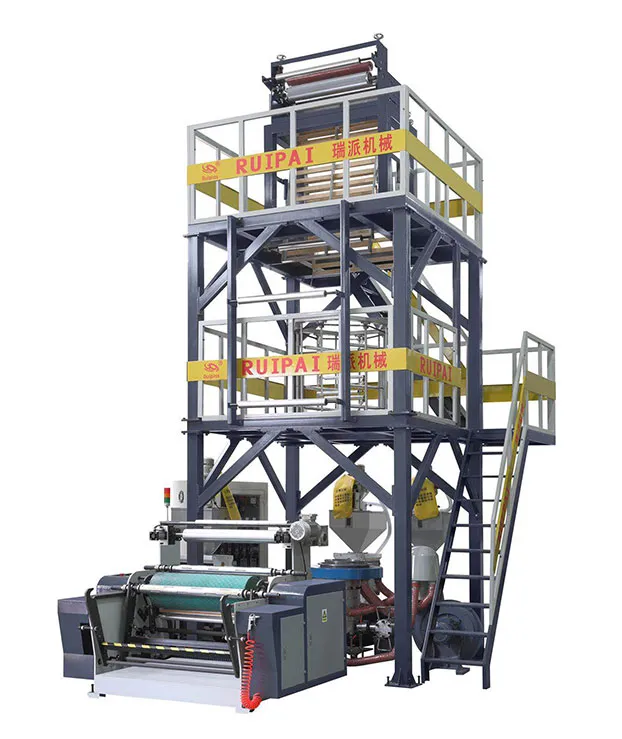
An AB film blowing machine changes that equation. By coextruding two layers simultaneously, you can put strength and barrier performance where they're needed — on the film surface — while using lower-cost material in the core. This guide covers what makes AB two-layer coextrusion different, what the machine delivers, and how to evaluate it for your operation.
The core advantage of AB coextrusion is combining two different materials in one film. Each layer does what it does best.
The A layer can be formulated for surface properties — printability, sealability, or abrasion resistance. The B layer can provide strength, barrier, or cost reduction. By putting expensive performance materials only where they're needed, AB coextrusion delivers better film properties at lower material cost. The result is a film that outperforms single-layer alternatives while using less premium resin.
AB two-layer lines process HDPE, LDPE, LLDPE, metallocene polyethylene, and EVA. That flexibility means you can switch between materials without changing machines. For converters serving diverse markets — food packaging, industrial films, agricultural mulch, shipping bags — that adaptability is a competitive advantage.
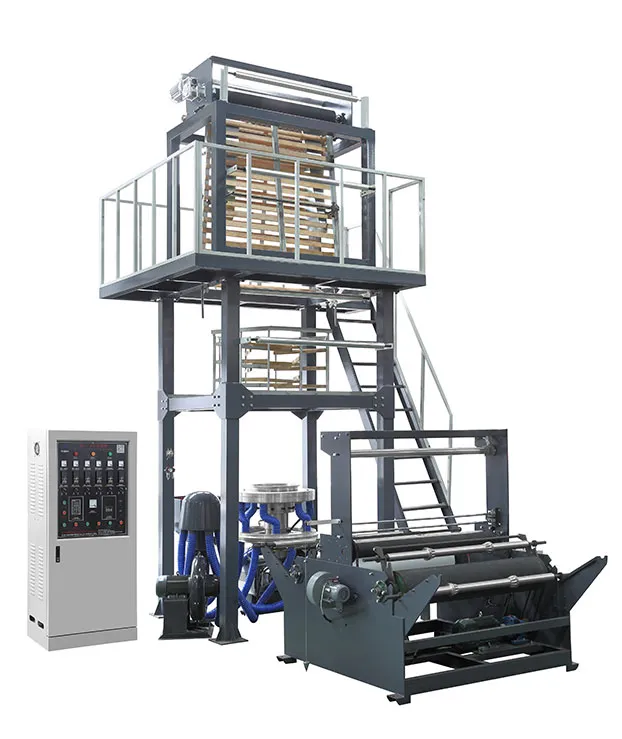
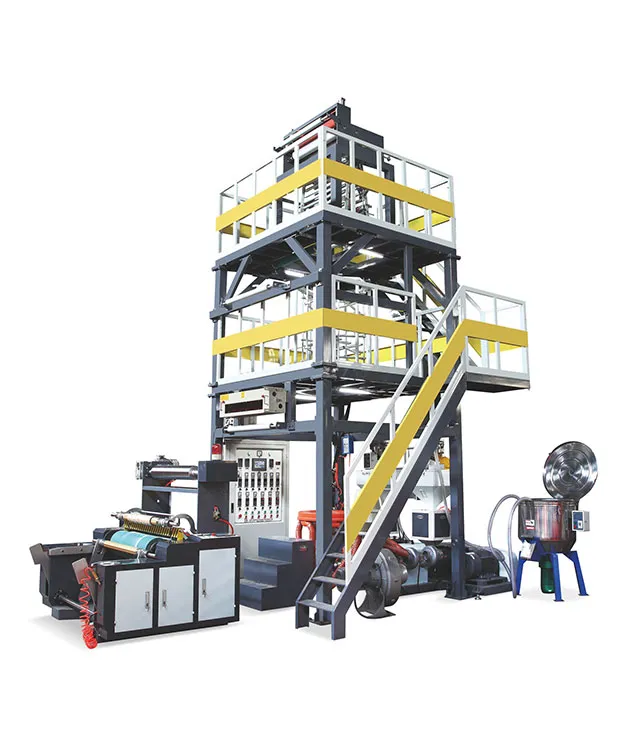
The two extruders each have their own screw, heating zones, and motor drive. This independent control allows precise temperature and melt management for each layer. The result: consistent layer thickness, uniform film properties, and high output that doesn't compromise quality.
AB two-layer blown film lines produce a wide range of films for demanding applications.
Shopping bags and shipping bags are one of the largest markets for AB coextruded film. The two-layer structure provides the strength and load-bearing capacity that retailers and e-commerce companies demand, with better moisture resistance and tear strength than single-layer alternatives.
Food packaging requires barrier properties, sealability, and regulatory compliance. Medical packaging demands cleanliness and consistent performance. AB coextrusion allows you to tailor each layer to meet these requirements — a seal layer on one side, a barrier or strength layer on the other.
Agricultural mulch films need UV resistance and puncture strength. Construction films require consistent thickness and dimensional stability. AB two-layer lines produce films for these demanding applications with the consistency that long runs demand.
Below is a quick reference table for AB two-layer film blowing machine specifications:
| Model | Film Width | Thickness | Capacity | Screw Diameter |
|---|---|---|---|---|
| WX-ABA50 | 100-600mm | 0.01-0.15mm | 60kg/h | 45/50mm |
| WX-ABA55 | 200-800mm | 0.01-0.15mm | 80kg/h | 50/55mm |
| WX-ABA60 | 300-1000mm | 0.01-0.15mm | 100kg/h | 55/60mm |
| WX-ABA65 | 400-1200mm | 0.01-0.15mm | 120kg/h | 60/65mm |
| WX-ABA75 | 600-1500mm | 0.01-0.15mm | 150kg/h | 65/75mm |
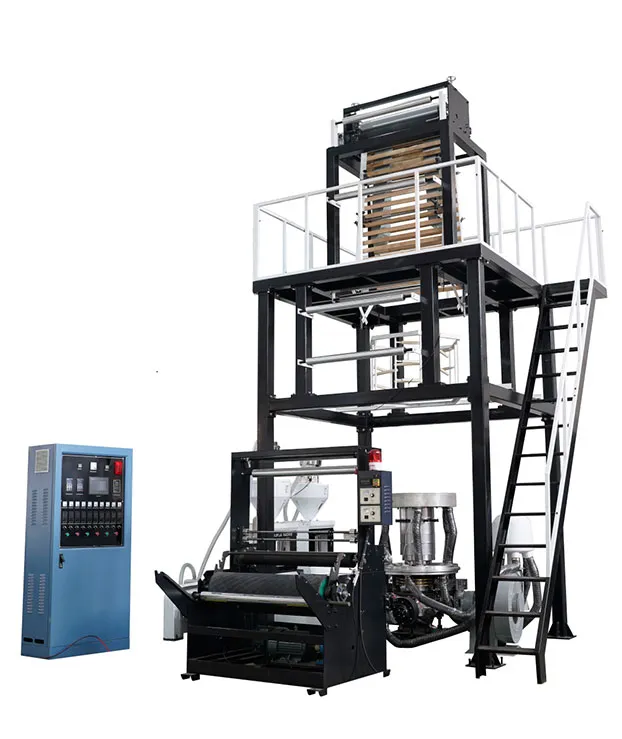
AB coextrusion delivers efficiency that single-layer lines can't match. Two features make the biggest difference.
One of the most powerful features of AB coextrusion is the ability to use recycled material or CaCO3 in the B layer at rates up to 80%. This reduces raw material costs significantly while maintaining surface quality. For film manufacturers competing on price, that cost advantage is decisive.
With only two extrusion units, AB lines achieve the functionality of a three-layer machine. One extruder handles the inner and outer layers while the other handles the core. This design reduces both equipment cost and energy consumption compared to three-layer alternatives. Lower operating costs mean better margins on every kilogram of film produced.
Q: AB vs. ABA — which one is right?
A: AB uses two extruders to produce a two-layer film — one A layer and one B layer. ABA uses two extruders to produce a three-layer film — A layer on both surfaces with a B layer in the middle. AB lines are simpler and more cost-effective for applications that don't need symmetrical layers. ABA lines offer additional strength and surface properties but at higher equipment cost.
Q: Can it handle biodegradable resins?
A: Yes. AB two-layer lines process biodegradable materials including PLA, PBAT, and other compostable resins. This makes them suitable for manufacturers transitioning to sustainable packaging.
Q: How much will it actually produce?
A: Output ranges from 60kg/h to 150kg/h depending on the model. The WX-ABA75, for example, produces up to 150kg/h with a film width of 600-1500mm. Actual output depends on the material, film thickness, and operating conditions.
Q: Where does the cost saving actually come from?
A: AB coextrusion reduces material costs in two ways. First, it allows you to put expensive performance resins only in the A layer where they're needed. Second, it enables high loading of recycled material or CaCO3 in the B layer — up to 80% of the total volume. Together, these savings can significantly improve your margin.
If any of these sound familiar, it's time to evaluate an AB film blowing machine upgrade.
Recycled material is a priority. If you're paying full price for virgin resin in all layers, you're leaving money on the table. AB coextrusion lets you put recycled material in the B layer — cutting material costs without sacrificing surface quality.
Performance demands are rising. If customers are asking for better film performance at the same price, AB coextrusion delivers. Two-layer structures provide more strength with less material than single-layer alternatives.
Material changes are slowing you down. If you're switching between HDPE, LDPE, LLDPE, and biodegradable resins, the flexibility of an AB line reduces changeover time and increases utilization.
Quality consistency is a challenge. If your single-layer line can't achieve the consistency, barrier, or sealability that customers demand, AB coextrusion puts the right material on each surface.
Competitors have moved ahead. If you're losing business to competitors with two-layer films, it's time to match their capability.
AB two-layer film blowing machines are designed for production environments that demand versatility, efficiency, and consistent quality. The combination of dual extruder control, wide material compatibility, and cost-saving features makes AB lines the practical choice for film manufacturers serving diverse markets.
Ready to upgrade your film production line with an AB two-layer coextrusion machine? Contact a supplier for a quote or product consultation. Share your target film width, material requirements, and output expectations — their team can recommend the right AB model for your specific application.
Environmentally friendly materials
Integrated production lines
Maximising your return on investment
GET A QUOTE


 English
 Español