A web-fed press where flexible material unwinds, passes the flexo printing stations, and rewinds with the image laid down in a single pass. Printing Machine frames of this type are built around roll-to-roll flexible stock rather than rigid sheets, so the substrate, web width, and print length set which frame fits the job. Here's what material the press handles, which sizes the range covers, and how the ink system works.
The press is defined for flexible substrates such as plastic films, paper, and woven fabric. The material list in the product FAQ also covers aluminum foil and label paper, to meet different packaging and advertising material needs. Because flexo ink sits on a raised plate and transfers against the moving web, the press is suited to roll stock that can unwind and rewind continuously rather than sheet-by-sheet work.
The model range splits into three web width groups: 600mm, 800mm, and 1000mm max web width, with matching printing widths of 560mm, 760mm, and 960mm. Printing length runs 191-914mm across the range, and plate thickness is 2.38mm. The width group is chosen from the reel and the repeat image length, while the print width leaves a margin inside the web for edges and trimming.
The technical parameters list a printing speed of 5-50m/min per model, while the feature table notes a top figure of 80m/min. Actual running speed depends on the substrate, ink coverage, and image repeat, so the target output should be matched to the frame rather than read from one speed number alone.
The ink delivery uses a chamber doctor blade together with a ceramic anilox roller. The anilox roller meters a controlled ink film through its engraved cells, and the chamber blade keeps the ink level consistent between the roller and the doctor unit. That setup replaces an open-roller ink bath, which keeps ink volume per repeat stable as the web moves through the station.
Nine RP models split by width and frame height. The 600mm group pairs a 560mm print width, the 800mm group a 760mm print width, and the 1000mm group a 960mm print width. Within each width group, the model suffix sets the frame: a first tier at 2200mm overall height, a second at 2400mm, and a third at 2800mm, so the frame chosen also reflects the station height and line layout needed in the shop.
The outline dimensions follow the width and tier. The 2200mm tier runs 2300×1600×2200mm for the 600mm model and 2100×1800×2200 or 2100×2000×2200mm for the wider models. The 2400mm tier runs 4800mm long with 1600, 1800, or 2000mm width, and the 2800mm tier keeps the same 4800mm length and width spread at 2800mm height. These dimensions set the floor space and the reel clearances around the press.
The equipment features an automated calibration system with a user-friendly interface, and operators adjust printing parameters through the touchscreen before completing calibration. The machine is described as relatively easy to operate, though basic training is recommended to get the best results; the training covers machine startup, printing settings, and troubleshooting. For a high-volume line, that setup path keeps changeover between substrate or repeat jobs manageable rather than requiring full mechanical recalibration each time.
The table groups the web and print widths, repeat length, plate, speed, ink system, and substrates exactly as listed, so a buyer can match the frame to the roll stock before an enquiry.
| Item | Detail |
|---|---|
| Product | Normal Flexo Printing Machine |
| Type | Flexographic (flexo) press |
| Web width | 600 / 800 / 1000mm |
| Printing width | 560 / 760 / 960mm |
| Printing length | 191-914mm |
| Plate thickness | 2.38mm |
| Printing speed | 5-50m/min per model; feature list up to 80m/min |
| Ink system | Chamber doctor blade + ceramic anilox roller |
| Substrates | Plastic film, paper, woven fabric, aluminum foil, label paper |
| Models | RP-2600/2800/21000, RP-4600/4800/41000, RP-6600/6800/61000 |
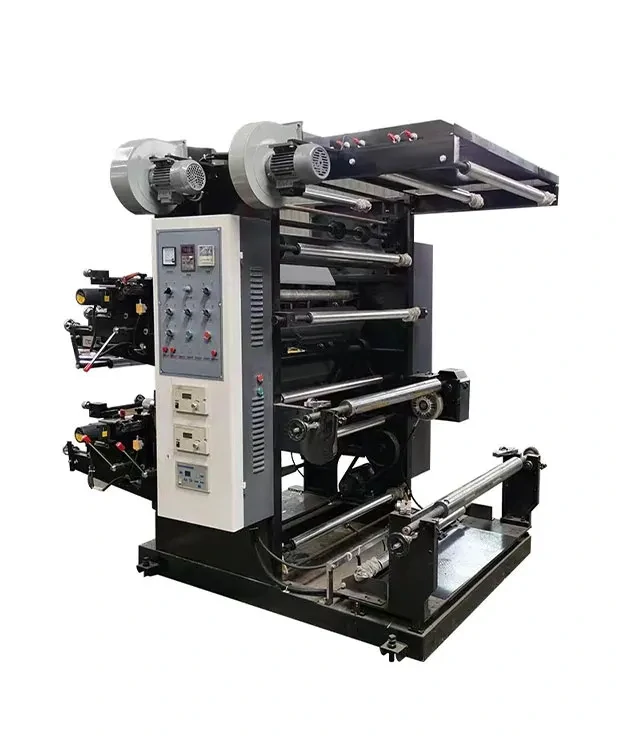
The flexo plate at 2.38mm thickness mounts to the plate cylinder, and the ceramic anilox roller supplies the metered ink the plate transfers. The engraving of the anilox and the plate choice are matched to the substrate and ink type, which is why the material and repeat length are settled before the frame and station setup are finalized.
The press is widely used in the packaging industry for its versatility, fast production speeds, and ability to print on various materials. The listed and pictured outputs include shopping bags, medical composite film with sterility indication, printed kids' bags, and label or advertising materials. The roll-printed web then feeds the bag-making, slitting, or lamination steps downstream in the packaging line.
Ruipai supplies the Normal Flexo Printing Machine across the nine RP frames listed above, with chamber doctor blade and ceramic anilox ink delivery, touchscreen calibration, and the substrate and width ranges in the table. The manufacturer draws on more than 20 years of experience in the film and machinery field, supports special customization needs, and can offer environmentally friendly material setups, integrated production lines, and configurations aimed at return on investment.
Send these so the frame and anilox setup can be matched on the first pass:
A Printing Machine selection is settled by the substrate and web width first, so those two details narrow the frame before repeat length, speed, and station configuration are checked.
Put the material type, the web width, and the repeat length in the first note. Those three decide the frame group and plate setup; speed target and downstream conversion follow after.
Send them through our request a quotation form and we'll come back with a Printing Machine frame matched to your substrate, web format, and production target.
Nov 24,2026
Can a Bag Making Machine Run Two Lanes at Once?
Environmentally friendly materials
Integrated production lines
Maximising your return on investment
GET A QUOTE


 English
 Español