Compostable film doesn't run like polyethylene through a screw. A Biodegradable blown film machine carries a barrel and die profiled for high-viscosity resin. Here's what it runs, what comes off the tower, and where the limits sit.
Not even close, and the differences show up in the first hour of a run. PLA melts sharp and turns brittle if it cools too fast. PBAT is softer, tackier, and far more forgiving on a die. Starch-based compounds carry filler that changes how the melt flows and how the film seals. PHA sits somewhere between the others and costs more per kilo. That's why a line tuned for one grade rarely handles the full family well — and why the screw and die here are specified around high-viscosity behavior instead of a single resin.
High viscosity is the honest answer behind most processing complaints on biodegradable stock. The barrel and die on this frame are adapted to it specifically, so melting stays smooth and you avoid blockages and uneven output. In practice that shows up on the roll as even gauge instead of thick bands sitting next to thin patches — the failure that ruins a compostable bag before anyone gets as far as printing it.
Yes, on a custom build rather than as an afterthought. For outdoor mulch, a UV stabilizer mixing system goes in with an optimized die head. For long-storage packaging, the screw's mixing section is adjusted and an anti-block masterbatch feed is added. Both changes live on the machine, so the resin you load stays the resin you already buy.
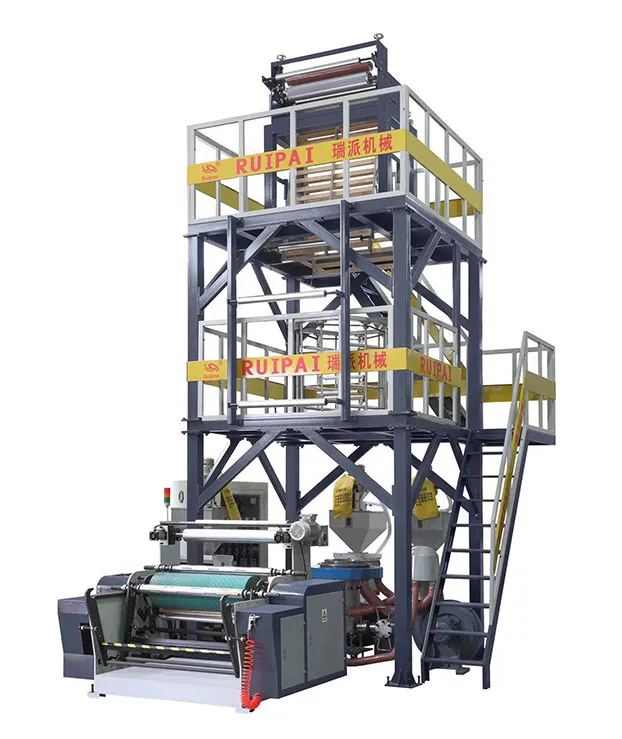
A monolayer line sends one melt through one die and one bubble, and that simplicity is the whole argument: fewer interfaces to cool, fewer places for a heat-sensitive resin to sit at the wrong temperature. The trade-off is that the single die has to be right, because there's no second layer to hide a gauge drift behind. Here the die and screw are matched to high-viscosity stock, so the melt arrives at the exit gap at an even temperature and the bubble forms without the banding you get when a die is pushed outside its material window.
The roll leaving this frame is single-layer biodegradable stock, and most of it lands in compostable packaging, agricultural mulch film, and disposable bags. Each outlet asks for something different. A shopping bag needs seal strength and a clean surface, since a compostable web tears at the seal faster than polyethylene does. A mulch roll needs enough opacity to shade soil and enough toughness to survive a tractor pass without splitting at the fold.
Food packaging takes compostable shopping bags and fresh-keeping films. Agriculture takes the mulch rolls. Daily chemicals use the film for compostable detergent pod packaging, disposables pull it for gloves and garbage bags, and medical packaging uses it for sterile disposables. None of those buyers are looking for polyethylene with a green label on the carton — they're looking for a film that holds up in a specific place, whether that's a compost windrow or a shelf.
Strength and transparency don't come from the resin alone. Precise temperature control holds the melt where it belongs, and airflow control sets how quickly the bubble freezes — together they decide thickness, density, and how clear the finished film reads on a shelf. Gauge runs from 0.01mm for a thin packaging film up to 0.1mm for a mulch sheet, and the same controls that hold a thin web steady are what keep a heavy one from clouding over. When clarity slips, the answer is usually a cooling setting rather than a new resin lot.
Three figures usually settle whether a job fits: how wide the roll comes off, how many kilos an hour the screw pushes, and how thin the die can hold. On the build shown here the roller tops out at 700mm and extrusion at 65kg/h, while standard models in the same series reach 1300mm width, with capacity customizable from 30kg/h for a small shop to 120kg/h for a line running three shifts.
Compliance deserves its own paragraph. Production is solvent-free, which keeps chemical solvents out of the process, and an exhaust gas treatment system is part of the package. That's the difference between answering an audit question with a document and changing the subject.
| Item | Value |
|---|---|
| Featured build: max roller width | 700 mm |
| Standard models: max roller width | 1300 mm |
| Featured build: max extrusion output | 65 kg/h |
| Customizable output range | 30-120 kg/h |
| Film thickness | 0.01-0.1 mm |
| Process | Solvent-free, with exhaust gas treatment |
| Resins | PLA, PBAT, PHA, starch composites, PLA/PBAT blends |
| Custom functions | Anti-UV, anti-block |
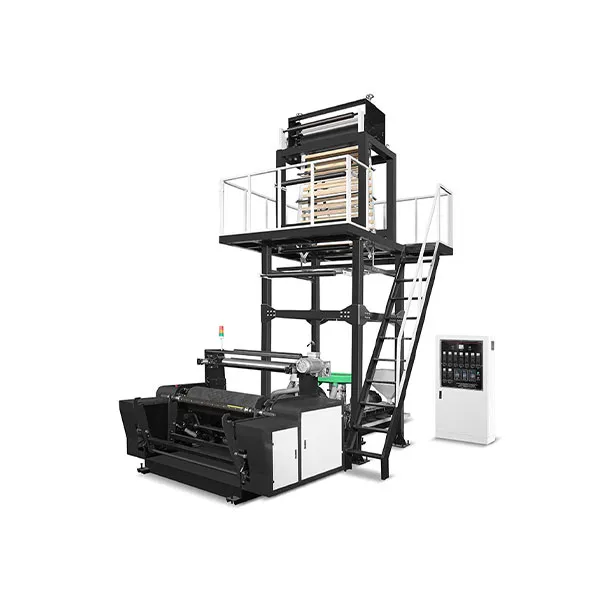
RUIPAI builds the Biodegradable PLA PBAT Monolayer Film Blowing Machine around a screw and die set up for high-viscosity resin, and the resin list runs longer than the product name suggests: PLA, PBAT, PHA, starch-based composites, PLA/PBAT blends, and modified grades carrying UV stabilizers or anti-block agents. A Biodegradable blown film machine from this range also covers the unglamorous side. High-wear-resistant components and an optimized cooling system stretch the maintenance interval, and the routine is short — daily cleaning of the die head and air ring, weekly lubrication of moving parts, monthly inspection of screws and sensors. Support after the crate arrives follows the same logic: installation, commissioning, and operator training, with technicians sent to site rather than a manual and a phone number.
What comes with the machine:
Every decision on this frame traces back to three numbers you already have on file: the grade in your silo, the gauge your product needs, and the roll width your converting equipment will accept. Bring those, and screw choice, die design, and haul-off settings stop being a guess.
Send the details through our request a quotation form and we'll confirm which build fits — including whether a UV or anti-block setup belongs in your Biodegradable blown film machine from the start instead of as a retrofit later.
Nov 17,2026
Can a Bag Making Machine Run Two Lanes at Once?
Environmentally friendly materials
Integrated production lines
Maximising your return on investment
GET A QUOTE


 English
 Español