When a packaging manufacturer recently upgraded their flexible film production, they faced a common dilemma: should they invest in an ABA or an ABC blown film line? Both are co-extrusion technologies, yet they deliver dramatically different results in barrier properties, material savings, and operational complexity.
This confusion isn’t new. Many plant managers and technical buyers struggle to decode the real-world impact of layer distribution. After analyzing dozens of real installations and consulting extrusion engineers, we’ve broken down the essential differences. By the end of this guide, you’ll know exactly which configuration matches your film specifications and budget.
The letters A, B, and C represent different polymer types or formulations. In a typical co-extrusion film blowing setup:
Layer A – often the outer/sealing layer (e.g., LLDPE or LDPE)
Layer B – the core or barrier layer (e.g., PA, EVOH, or recycled material)
Layer C – the other outer layer (can be same as A or different)
What changes between ABA and ABC is symmetry and material flexibility. An ABA line uses the same material for both outer layers (A), sandwiching a different core (B). An ABC line allows three distinct materials – one for each layer.
This seemingly small difference affects everything from roll flatness to sealing strength. Let’s examine each critical dimension.
| Feature | ABA Blown Film Line | ABC Blown Film Line |
|---|---|---|
| Layer arrangement | A (outer) – B (core) – A (outer) | A – B – C (three different materials possible) |
| Symmetry | Fully symmetrical | Asymmetrical |
| Typical material usage | Same polymer on both surfaces | Different functional surfaces (e.g., sealable inside + printable outside) |
| Recycled content placement | Core layer B can hold up to 30-50% recycled material without touching outer surfaces | Limited – recycled material must be carefully positioned to avoid surface defects |
According to extrusion engineers at a leading European machinery institute, symmetrical ABA structures are preferred for shrink films and stretch hoods, where balanced cooling and winding tension are critical. ABC lines, however, dominate the high-barrier food packaging segment, where one side requires sealability and the other needs heat resistance or printability.
ABA advantages:
Better layflat and winding stability due to symmetrical cooling
Lower die head complexity → easier purge and color change
Ideal for commodity packaging (garbage bags, shopping bags, agricultural films)
Allows using recycled B-layer without compromising appearance
One large agricultural film producer reported a 12% reduction in production waste after switching from an ABC to an ABA design, simply because gauge variation dropped significantly.
ABC advantages:
Tailored surface properties – different materials can be extruded on each side
Superior oxygen/moisture barrier by combining EVOH or PA in B or C layers
Enables functional films like “easy-peel” lids or anti-fog meat packaging
Supports higher added-value products (medical wraps, industrial lamination films)
Real-world case: A flexible packaging converter upgraded to an ABC co-extrusion line and developed a three-material structure (LLDPE outer, EVOH middle, EVA sealant) for modified atmosphere packaging. Their profit margin per ton increased by 34% within six months.
This is where many buyers hesitate – and rightly so. An ABC blown film line typically requires:
More extruders (three individual units vs two in ABA)
A more complex die head with separate feed channels
Advanced process control to prevent inter-layer contamination
Higher operator training costs
An ABA line, in contrast, uses two extruders (one for A materials, one for B). The A layer flow is split inside the die, which lowers hardware cost. However, ABA cannot produce asymmetric films.
To put numbers on it: from recent supplier data and industry surveys, an ABC configuration costs roughly 40-60% more than an equivalent-output ABA system, considering die, extruders, and control upgrades. But the per-kilogram profit of ABC films can be 2-3x higher.
So which one is right for you? It depends entirely on your target products and material strategy.
Ask yourself three practical questions:
Do you need different inner and outer surface properties? (e.g., one sealable + one high-gloss printable) → Yes? ABC is the only answer.
Will you run recycled content or color masterbatch in the core? → ABA handles this very well and at lower cost.
What is your typical order quantity per film structure? ABC requires longer runs to justify changeover time.
Many middle-ground producers start with an ABA line to build volume, then add an ABC die and extruder later as a modular upgrade. This phased approach reduces initial risk.
If you frequently receive requests for three-material films (like nylon/EVOH/adhesive combinations), jumping straight to ABC saves you from retrofitting later. However, for 70% of general packaging applications, a well-tuned ABA line delivers perfectly acceptable performance at a much lower entry cost.
Based on field maintenance reports from over 200 installations, these errors cost producers thousands annually:
Ignoring melt temperature differences – When using polymers with large viscosity gaps (e.g., LDPE + EVOH), poor layer adhesion results. Always verify compatibility windows.
Underestimating purge requirements – Switching from an ABC configuration back to ABA mode requires thorough purging of the third extruder and die channel. Failing this causes black specks.
Skipping gauge profile testing – Asymmetric structures (ABC) are more sensitive to thermal imbalances. At least weekly capacitance or X-ray gauge checks are mandatory.
The blown film market is shifting. With rising demand for recyclable mono-material structures (all-PE or all-PP barrier films), many ABC lines now run “symmetric” recipes as well – effectively operating in ABA mode by feeding the same polymer into extruders A and C.
This is where die head flexibility becomes critical. A modern film blown machine allows you to switch between ABA and ABC configurations without swapping hardware. You simply adjust feed block settings or flow distribution pins.
For operations that run both commodity and specialty films, this adaptability reduces downtime from days to hours. Some equipment manufacturers have integrated automatic layer sequence changeovers that a single operator can execute in under 30 minutes.
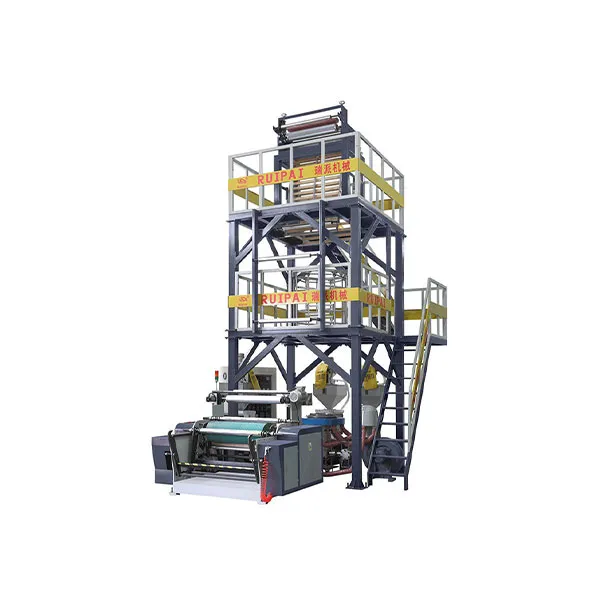
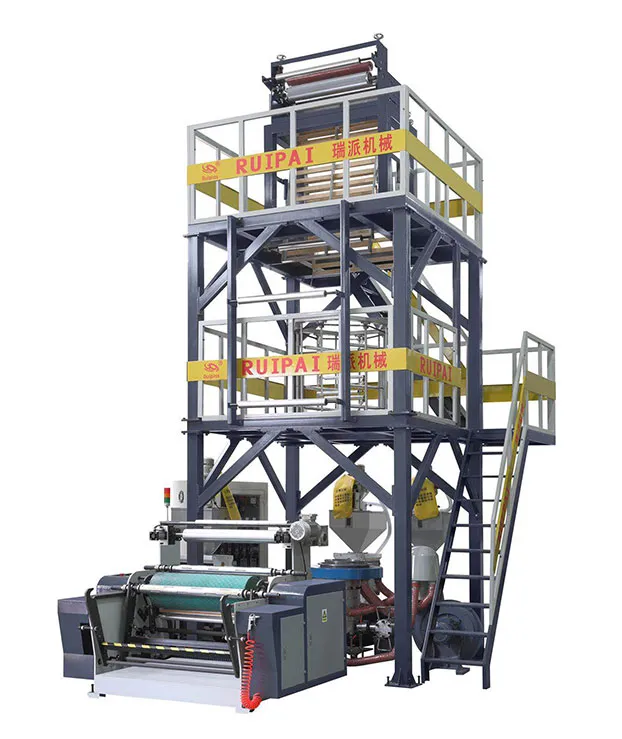
If the technical details above feel overwhelming, you’re not alone. Many production managers prefer to start with a clear configuration checklist and then explore pre-tested line layouts. One practical way is to review detailed specifications and module options of systems designed for both ABA and ABC compatibility. Manufacturers like RUIPAI offer modular co-extrusion platforms where you can scale from two extruders to five without replacing the main die body. Their approach bridges the cost-efficiency of ABA with the upgrade path to ABC – exactly what fast-growing film converters look for.
To see how a flexible multilayer setup can match your target film structures and budget, you can check available configurations that include different extruder counts, die diameters, and automatic profile control systems.
| If your priority is... | Choose... |
|---|---|
| Lowest upfront investment and easy operation | ABA blown film line |
| Running recycled material in a hidden core | ABA |
| Asymmetric surface properties (seal/print/heat) | ABC |
| High barrier with EVOH or PA layers | ABC |
| Maximum future flexibility (both symmetric & asymmetric) | Modular platform supporting both |
No universal “best” exists. The smartest buyers define their film portfolio for the next 3-5 years, then select a line that fits 80% of that volume – while keeping an upgrade path for the remaining 20% of specialty orders.
If you’re currently evaluating quotes or drafting specifications, a next logical step is to explore real-world case studies and customization options for your exact layer arrangement needs. Understanding how different die head designs, extruder configurations, and cooling systems interact can save months of trial and error.
For those who prefer a structured approach, RUIPAI provides a free configuration worksheet and technical consultation to help you compare ABA vs. ABC based on your target materials, output rates, and budget. You can get selection advice directly without committing to a specific layout – simply share your most common film structures.
Environmentally friendly materials
Integrated production lines
Maximising your return on investment
GET A QUOTE


 English
 Español