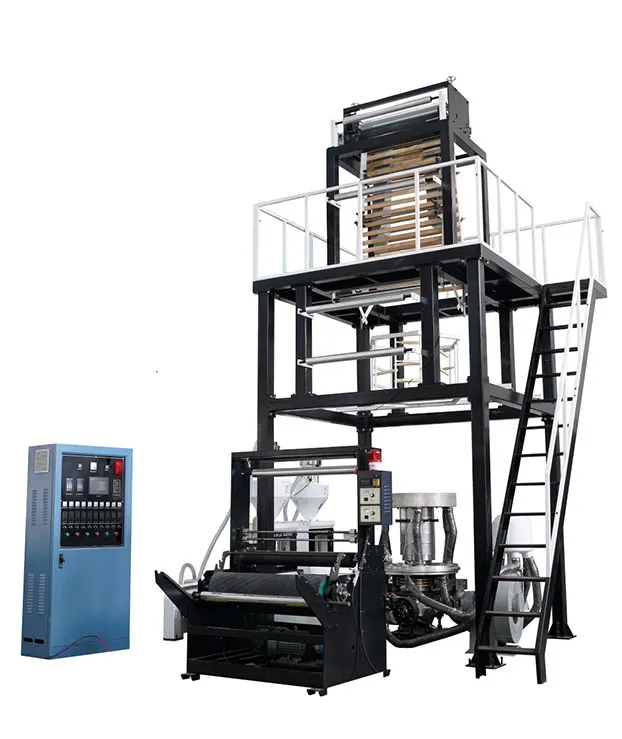
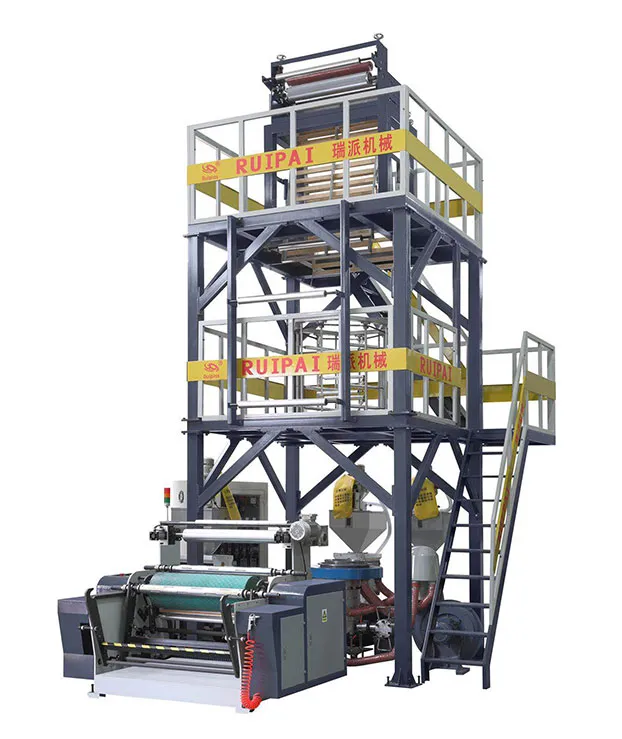
If you are a packaging manufacturer looking to enter the compostable bag market, your first question probably sounds like this: What type of equipment do I need to produce certified compostable bags that actually work? The short answer is that not every conventional blown film line can handle biodegradable resins like PLA, PBAT, and starch blends. These materials behave differently—they are more temperature-sensitive, less forgiving on screw design, and require tighter process control than traditional polyolefins. And here is where the Film Blown Machine plays a role, but more on that later.
The global compostable packaging market is not a niche anymore. According to Stratistics MRC, the global biodegradable and compostable packaging market was valued at USD 83.7 billion in 2025 and is expected to reach USD 137.1 billion by 2032, growing at a CAGR of 7.3%. Meanwhile, the compostable packaging materials segment alone is projected to grow from USD 1.68 billion in 2025 to USD 3.29 billion by 2032 at a 9.8% CAGR. These numbers are not just statistics—they represent real orders, real contracts, and real opportunities for manufacturers who move early.
But here is the catch: jumping in without understanding the equipment nuances will burn your budget and kill your product quality.
Over 130 countries have implemented restrictions on single-use plastics as of 2024. The European Union's Single-Use Plastics Directive banned plastic plates, cutlery, straws, and stirrers, pushing businesses toward certified compostable alternatives. The newly enacted PPWR (Packaging and Packaging Waste Regulation) now requires all packaging to be recyclable by 2030, with performance targets ramping up through 2035.
Italy recently proposed exempting certified biodegradable and compostable packaging from the PPWR's single-use bans, specifically for pre-packed fresh produce, HORECA portions, and even cosmetic flexible packaging. The rationale? Compostable packaging minimizes contamination in organic waste streams and transforms potentially unsorted waste into high-quality agricultural resources.
A recent industry survey found that 73% of global consumers are willing to pay premium prices for sustainably packaged goods, with compostability becoming a key purchase influencer in food and personal care segments. More than 400 global brands have pledged to eliminate conventional plastics by 2025–2030 targets. This is not greenwashing—this is procurement policy.
If you are a film converter or bag manufacturer, your customers are already asking for compostable options. The question is whether your compostable film extrusion equipment can deliver consistent quality at competitive cost.
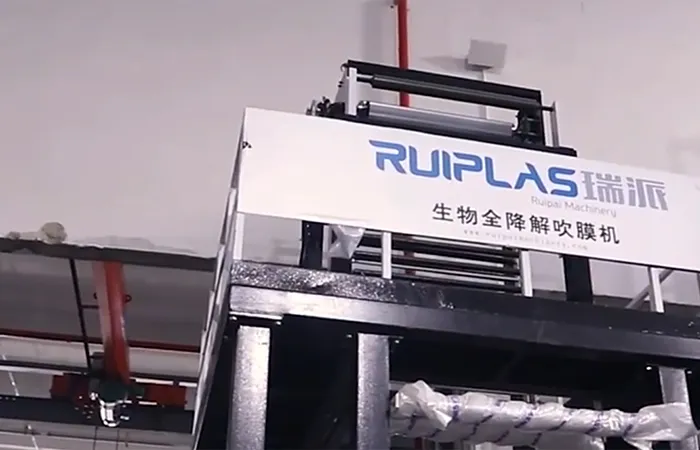
PLA and PBAT are not PE. They have narrower processing windows. If your extruder screw is designed for polyolefins, you will experience degradation, gels, and inconsistent melt flow. The degradation products not only ruin film appearance but also compromise biodegradation performance—which means your bags might fail certification testing.
Melt temperature control becomes critical. A variation of 5–10°C can mean the difference between a perfect film and a production nightmare. Conventional lines often lack the precision needed for these sensitive materials.
Biodegradable resins are hygroscopic—they absorb moisture from the air. Moisture hydrolyzes PLA during extrusion, causing molecular weight reduction and brittle films. Desiccant drying systems are not optional; they are mandatory. Many standard film lines do not include integrated drying, leaving manufacturers to retrofit after discovering the problem.
The bubble behavior of biodegradable resins differs significantly from LDPE or LLDPE. You need die gap adjustments, air ring optimization, and often IBC (Internal Bubble Cooling) systems that can handle lower melt strength materials. Without these features, you will fight inconsistent gauge, frequent bubble breaks, and low output rates.
EN 13432 is the European standard for packaging recoverable through composting. It requires at least 90% biodegradation within 6 months, disintegration such that no more than 10% of dry weight remains on a 2mm sieve after 12 weeks, and no ecotoxicity in finished compost. ISO 17088 specifies similar requirements, stating that compostable plastics must disintegrate and biodegrade at rates comparable to yard trimmings, kraft paper bags, and food scraps.
To achieve these certifications, your production process must be consistent and repeatable. Third-party auditors like TÜV SÜD or TÜV AUSTRIA conduct periodic factory inspections and test production samples. A line that drifts in temperature control or gauge uniformity will fail these audits.
The screw geometry determines everything—melt uniformity, energy consumption, and output stability. For biodegradable resins, you need a barrier screw design with optimized compression ratios. Avoid general-purpose screws designed for commodity plastics. Some manufacturers offer dedicated screw sets that can be swapped depending on resin type, which gives you flexibility if you run multiple material families.
Five or six heating zones are standard. For compostable resins, eight or more zones give you the granular control required to manage the narrow processing window. Look for PID controllers with real-time data logging—not just for production monitoring but for certification documentation.
A closed-loop desiccant dryer with dewpoint monitoring is non-negotiable. The dryer should feed directly into the extruder hopper without exposing dried pellets to ambient air. Some advanced lines include gravimetric blending systems that precisely mix virgin resin with masterbatch or recycled content while maintaining moisture control.
Gauge variation is the enemy of certification. An online thickness scanning system (usually nuclear or capacitive) with closed-loop feedback to the die bolts or air ring is essential for consistent film properties. Without it, you are guessing.
This is where the conversation gets personal. Every manufacturer's needs differ—your target bag thickness, your available factory floor space, your local climate (which affects moisture conditions), and your specific resin formulations all influence equipment design.
At RUIPAI, the approach is not "one machine fits all." The engineering team evaluates your production goals and recommends tailored die sizes, screw geometries, and cooling configurations based on your material mix. Need to switch between PBAT-rich blends and PLA-dominant formulations? They can design a modular screw system that adapts without a full rebuild. Processing high-filler compounds for cost reduction? The barrel lining and screw coating can be specified for abrasion resistance.
Factory acceptance testing is conducted with your actual resins—not just generic pellets—before the line leaves the workshop. This eliminates the "surprise" of discovering processing issues after installation.
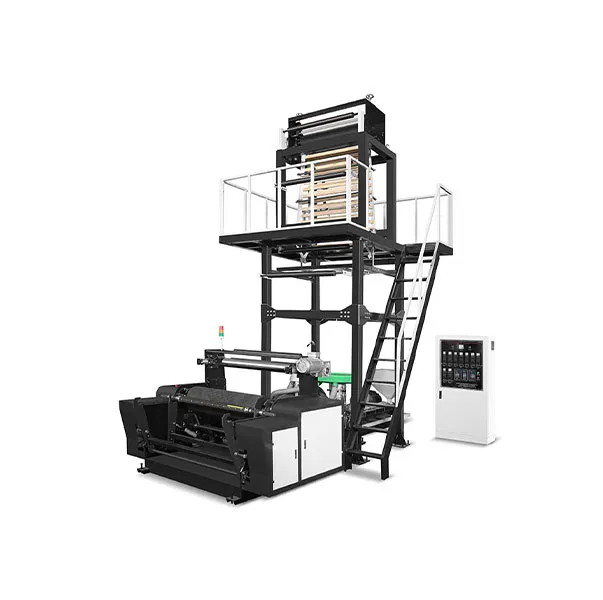
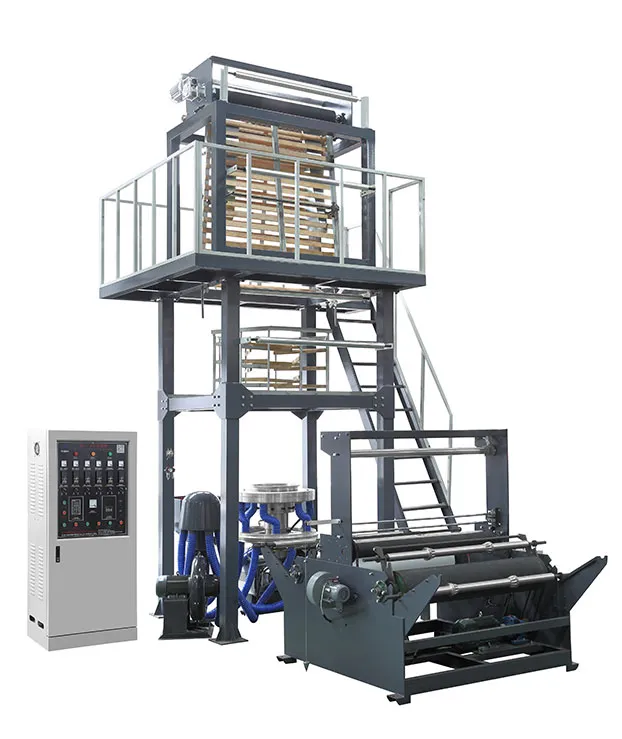
When evaluating production equipment for compostable bags, you have several technology paths. Traditional monolayer blown film lines are the most common starting point, but they often require significant retrofits to handle biodegradable resins—new screws, added dryers, upgraded temperature controls. The cumulative cost of retrofits can approach or exceed a purpose-configured line.
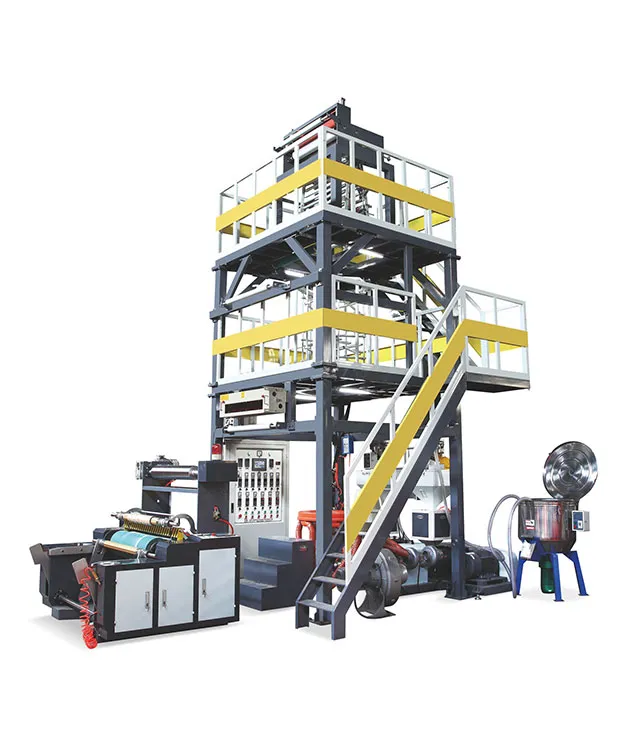
Multi-layer coextrusion lines offer advantages for compostable bags that need barrier properties (oxygen or moisture resistance) or improved mechanical strength. However, they also introduce complexity—each layer requires its own extruder and temperature profile, and interlayer adhesion with dissimilar biopolymers can be problematic.
Cast film lines produce excellent gauge uniformity but lack the orientation and strength that blown film naturally provides. For most compostable bag applications—grocery bags, garbage bags, produce bags, mailers—blown film remains the dominant technology because of its balance of strength, throughput, and cost.
This is where the Film Blown Machine—properly configured for biodegradable resins—becomes the practical solution. Unlike cast film lines that require downstream orientation equipment to achieve useful mechanical properties, a well-designed blown film line produces oriented film directly from the bubble. The trade-off is that blown film generally has lower gauge uniformity than cast film, which is why online thickness control is non-negotiable for certification.
Compared to blown film lines for conventional plastics, a purpose-configured biodegradable line includes:
Lower compression ratio screws (typically 2.5:1 to 3:1 instead of 3.5:1)
Tighter temperature tolerance (±1°C instead of ±3°C)
Integrated drying (not an aftermarket add-on)
Optimized die gap (usually 1.0–1.5mm for biopolymers vs. 1.5–2.5mm for PE)
Stainless steel material contact surfaces (corrosion resistance for acidic degradation byproducts)
One of the fastest ways to lose customer trust is to deliver bags that claim compostability but fail certification tests. The market is becoming sophisticated. Buyers now request certificates of analysis showing biodegradation test results, not just generic claims.
Your production line must enable batch traceability—recording processing parameters (temperatures, screw speeds, output rates) for each production run. When an auditor shows up, you need to demonstrate consistent production within validated parameters.
EN 13432 compliance requires that packaging materials biodegrade at least 90% within 6 months under industrial composting conditions (typically 58°C). ASTM D6400 is the equivalent U.S. standard. OK compost INDUSTRIAL certification from TÜV AUSTRIA is widely recognized in European markets.
Producing certified compostable bags is not just about raw materials. If your processing degrades the polymer or introduces non-compostable additives, your certification is void. This is why equipment validation is as important as material selection.
The compostable packaging market is projected to reach USD 118.9 billion by 2032, up from USD 77.0 billion in 2025. Early movers are capturing premium pricing and locking in long-term contracts with major retailers and food service chains.
But equipment lead times matter. A custom-configured blown film line typically requires 8–16 weeks from order to delivery, plus installation and commissioning. If you are currently running conventional lines and retrofitting, allow for at least 4–6 weeks of trial runs and process optimization before stable production.
Total cost of ownership for a dedicated biodegradable line is generally 20–35% higher than a commodity line of similar output capacity. However, the margin per ton of compostable bags is often 2–3x higher than conventional plastic bags, particularly for certified products targeting regulated markets. The payback period for a properly specified line is typically 12–24 months at reasonable capacity utilization.
The compostable bag market is real, growing, and increasingly regulated. Success requires three things: certified raw materials, consistent production processes, and third-party validation. Your equipment sits at the center of all three.
The manufacturers who will win are not necessarily the ones with the most expensive lines, but the ones who understand how their specific resin formulations interact with screw design, temperature profiles, and cooling systems. That understanding comes from working with equipment suppliers who process these materials daily—not just on paper, but on the factory floor.
Environmentally friendly materials
Integrated production lines
Maximising your return on investment
GET A QUOTE


 English
 Español