Most first-time buyers focus entirely on the initial price tag. They think a brand-new blown film machine guarantees flawless production. But the reality is more sobering. Industry data shows the global market for this equipment was valued at USD 4.91 billion in 2025 and is projected to expand at 7.90% CAGR through 2032, driven largely by surging flexible packaging demand. Yet despite this growth, countless converters end up battling unstable bubbles, uneven gauges, and crushing downtime—not because their equipment lacks horsepower, but because their purchasing process started on the wrong foot.
Let us be blunt. A cheap extrusion line with a rock-bottom sticker price is often an invitation to a silent cash drain. Too many buyers treat this purchase like a commodity transaction—find the lowest number and sign the dotted line. They forget that in film extrusion, reliability is profitable and downtime is a direct competitor.
A 2025 analysis covering 38 audited production plants found that total maintenance costs for extrusion lines averaged just USD 0.013 per kilogram—roughly 1% of sales price. But the gap widens dramatically between facilities. Plants following predictive maintenance protocols spent 30% less on upkeep than those relying on reactive repairs. Translate that into real numbers. A 400 kg/hour line operating 5,000 hours annually that takes a 7% output loss because of wear neglect erodes USD 42,000 of contribution margin per year. That is the actual cost of chasing the cheapest initial invoice.
When you evaluate suppliers, look past the glossy price sheet. Ask for lifecycle cost projections. Request data on average spare parts consumption. A supplier that cannot tell you the expected service life of their screw and barrel combination—or the typical replacement cost—is sending a clear signal: you are on your own once the container leaves the port.
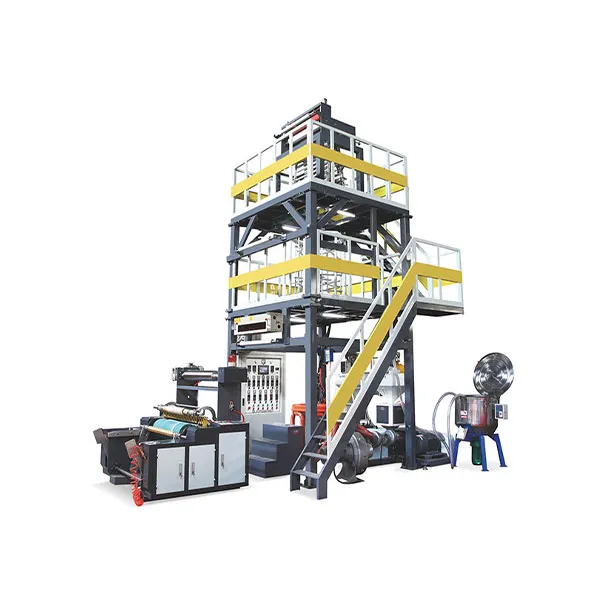
Manufacturers love to quote maximum output numbers. "Up to 350 kg/hour!" looks impressive in a brochure. But maximum output with virgin LDPE running at ideal melt temperatures bears almost no resemblance to real-world performance with 30% recycled content or a tricky LLDPE blend. Plastic film extrusion is a physics problem, not a marketing claim.
Here is where emotion enters the equation. I have watched buyers proudly uncreate a machine rated for 300 kg/hour, only to find it struggles to hold stable thickness below 50 microns because the cooling ring and die design were never optimized for thin-gauge work. They paid for motor power they cannot fully use, but they never asked the right technical question: what is the stable operating window for the specific resins and gauge ranges I actually run?
A reputable selection guide emphasizes that "a machine built for stable thin film requires different cooling, air ring, and die performance than a machine built mainly for thick film". The screw length-to-diameter ratio, compression zone geometry, and even the air ring turbulence pattern change dramatically across applications.
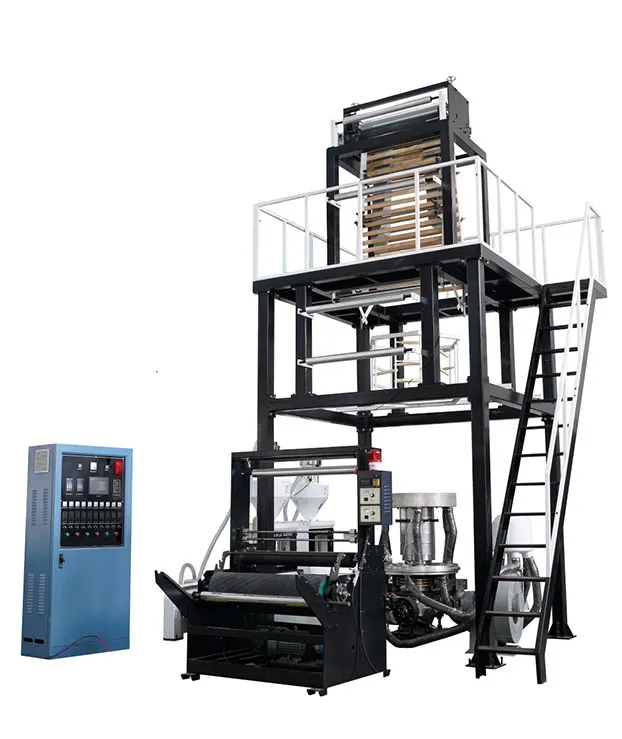
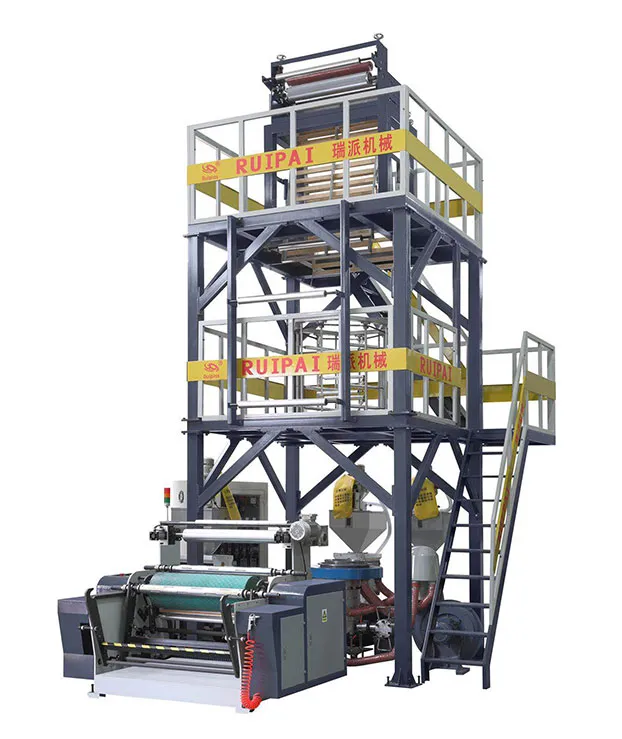
Every extrusion line follows the same four core steps: melting, bubble formation, flattening, and winding. But what separates a workhorse line from a frustration machine lives in the specifications that never make it into the elevator pitch.
Take the traction roller system. Most low-end and mid-range lines use three or four haul-off rollers. A five-roller design might seem like a minor detail—until you see the results. Side-by-side tests show that five-roller traction systems reduce downstream bag-making rejects by 40% compared to three-roller configurations. Why? Because each additional roller flattens the collapsing bubble more gradually, distributing tension evenly and preventing the edge waves and center sag that cause winding defects.
Similarly, pay close attention to screw material and alloy composition. Cheap screws using standard steels will develop wear grooves far faster when processing filled compounds or recycled resins. A screw that loses 0.05 mm of chrome plating per 1,000 operating hours translates into rising melt temperatures, higher energy draw, and eventual output instability. That is not theoretical. It is metallurgy.
A trustworthy equipment partner will openly discuss these engineering trade-offs. They will explain why they specify certain alloys, where they source their drives (brands like ABB or Siemens versus unbranded alternatives), and how their warranty actually protects you beyond the first 12 months. If the conversation stays stuck at extruder diameter and layer count, keep digging.
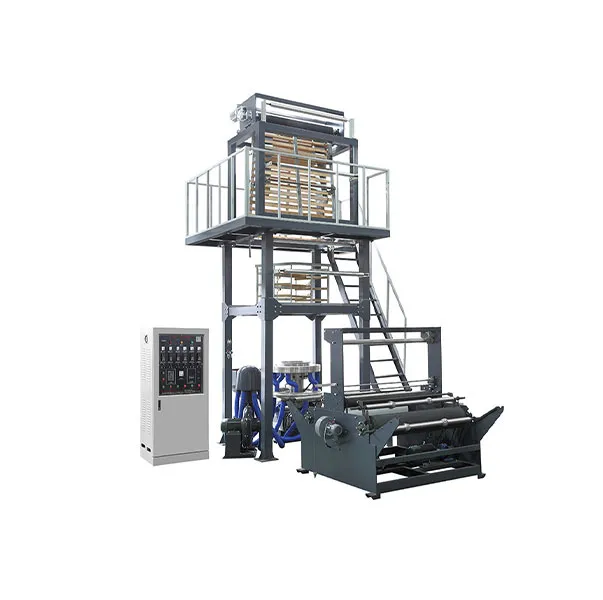
Many buyers assume that once you have an extrusion line, you have covered all your bases. That is dangerously incomplete. Cast film production operates on a fundamentally different principle. Cast lines typically run 50% more pounds per hour than blown lines for a given width because the blown process creates two thicknesses for one web width of production. Cast extrusion also delivers superior optical clarity and outstanding thickness uniformity, typically within ±2% variation, compared to the ±4% range of some blown systems.
But cast technology cannot match the mechanical toughness and balanced tear resistance of blown film. Blown orientation draws the polymer in both the transverse and machine directions, creating a strength matrix that cast film simply cannot replicate. For heavy-duty industrial liners, agricultural mulch films that must resist puncture, or shrink bags that undergo significant handling stress, blown film remains the superior choice. Cast technology excels for high-clarity lamination films, food overwraps where aesthetics matter, and applications requiring perfect roll geometry.
The mistake occurs when buyers select a production method without honestly assessing their product mix. If you need brilliant transparency and ultra-tight gauge control for a premium chocolate wrap, chasing a blown line because "it is more versatile" wastes money. Conversely, if your primary product is heavy-duty stretch hood film that must survive warehouse abuse, purchasing cast equipment is a shortcut to customer complaints.
You are not buying a vending machine. You are buying an ongoing relationship. Equipment that sits idle waiting for a replacement heater band or a technician who understands the PLC logic loses money every hour. And when downtime strikes, the cost is brutal. Industry estimates place unscheduled downtime for extrusion operations between USD 500 and USD 2,000 per hour, depending on product value and volume.
Ask the hard questions before you pay. Where are spare parts warehoused? If a haul-off belt fails on a Tuesday afternoon, what is the realistic shipping timeline to your facility? Does the supplier maintain a stock of critical components—heater bands, thermocouples, screen packs, relay boards, proximity sensors—or will you face a six-week wait for air freight from the other side of the world? A survey across multiple plants found that 80% of unplanned downtime traces to just six common components. Holding one set of each costs under USD 4,000 and slashes average repair time from 11 hours to 2 hours. That inventory pays for itself in a single emergency.
A supplier with genuine commitment to after-sales service does not hide behind a vague "we provide support" clause. They offer documented response time guarantees, remote diagnostic capabilities that leverage real-time sensor data from IoT-enabled extruders, and multilingual technical support. They provide operator training that goes beyond a PDF manual. They treat your uptime as their reputation.
The difference between a profitable film production line and a financial headache rarely comes down to a single spec sheet line. It comes down to fit: matching the film extrusion system to your actual resin types, your realistic target gauge range, your operator skill level, and your growth trajectory.
A single-layer line optimized for 100-micron agricultural film will perform beautifully at that task. The same line forced to produce 20-micron high-clarity candy wrap will fight you every shift. Similarly, a five-layer coextrusion line capable of producing sophisticated barrier structures is engineering overkill—and expensive to maintain—if your only product is standard LDPE shopping bags.
Our experience at RUIPAI has taught us that customization is not a luxury. It is the foundation of predictable ROI. A standard configuration forces your production needs to bend to the equipment. A tailored configuration bends the equipment to your needs. That is the difference between surviving in the packaging market and thriving there.
Avoid starting with a budget and shopping for a machine that fits inside it. Start with a clear technical profile: what resins (including recycled content percentage), what thickness range with what tolerance requirement, what layflat width, and what downstream converting steps come after the film leaves the winder. Then evaluate equipment against that profile, not against a spreadsheet column labeled "price."
A reliable partner helps you navigate these trade-offs. Check the technical specification details to see how extrusion screw geometry, air ring design, and haul-off configuration interact for different film types. When you communicate your real-world constraints—not just the ideal test conditions—the right equipment match becomes far more obvious.
The blown film market offers abundant choices. But abundance without guidance creates confusion. Focus your search on suppliers who demonstrate manufacturing depth, transparent engineering documentation, and a service record you can verify. The machine you choose will run for thousands of hours and consume hundreds of tons of resin annually. Small differences in stability and efficiency compound into major bottom-line outcomes.
The five mistakes above are avoidable. None of them require superhuman technical expertise to catch. They simply require asking the right questions before you sign—and working with a team that answers them honestly, completely, and with your production reality front and center.
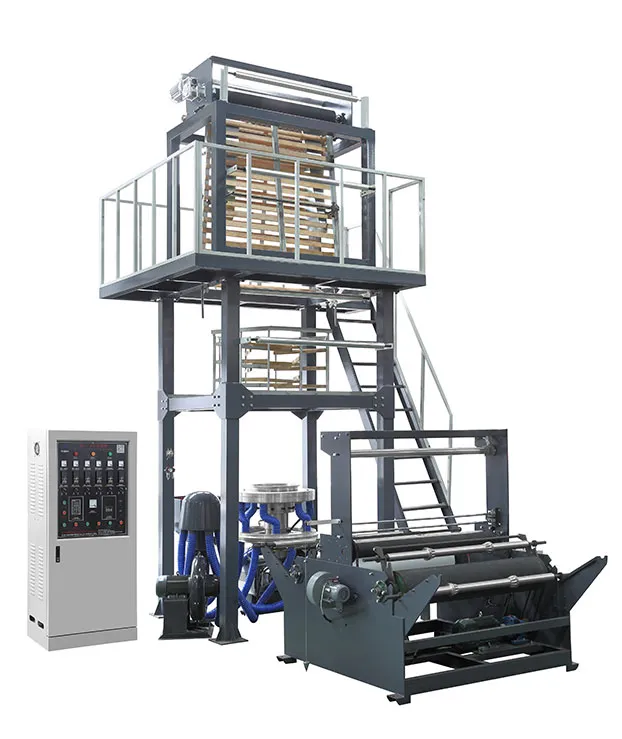
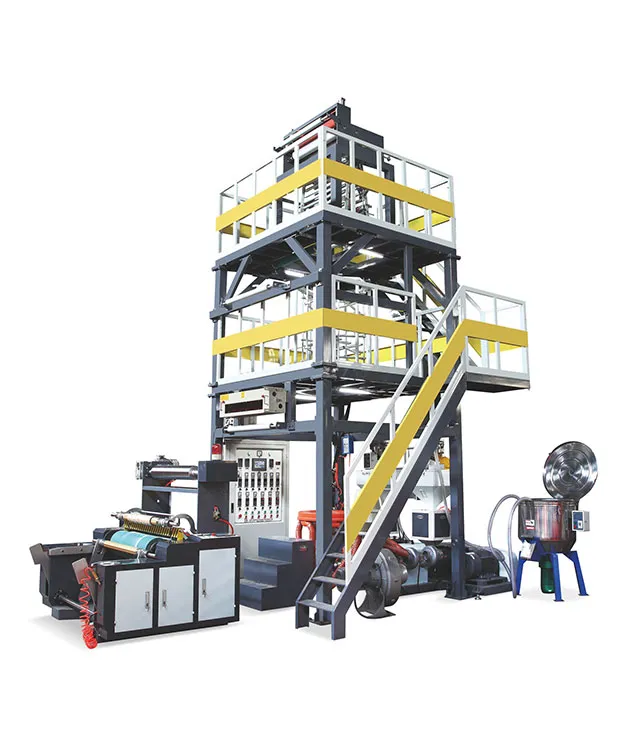
Environmentally friendly materials
Integrated production lines
Maximising your return on investment
GET A QUOTE


 English
 Español