For film manufacturers navigating tight budgets, shifting packaging regulations, and diverse client demands, choosing between single and multi-layer extrusion setups remains one of the most critical investment calls, and Film Blown Machine acts as the core hardware that defines production flexibility and final film performance. According to 2025 data from Future Market Insights, the global blown film machinery market hits $8.2 billion in value, with mid-sized factories split nearly 50/50 between monolayer entry-level lines and upgraded multi-layer co-extrusion units. Every production manager I’ve collaborated with over a decade of packaging machinery consulting faces the same dilemma: over-invest in advanced multi-layer gear for basic orders, or settle for limited monolayer capacity and lose high-margin packaging contracts. This breakdown cuts through technical jargon, real-world operational pain points, and industry cost benchmarks to help you match your factory scale and product positioning with the right blown film solution.
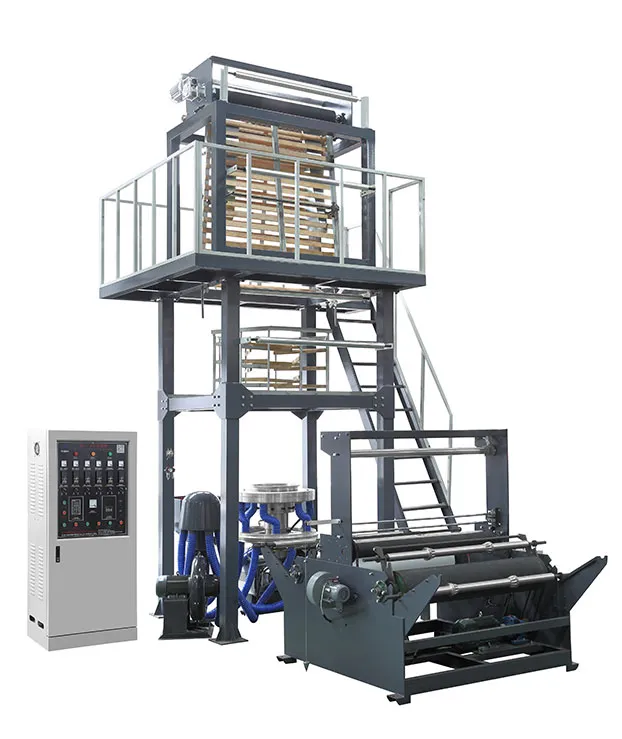
To make a practical choice, you first need to move past surface-level specs and understand how each line type functions in daily workshop operations. single-layer film extrusion systems feature streamlined structures with one extruder, a simple die head, and straightforward material feeding workflows. Their biggest draw lies in operational simplicity: workers need minimal technical training, raw material switching takes minutes, and daily cleaning or routine maintenance requires no specialized tools.
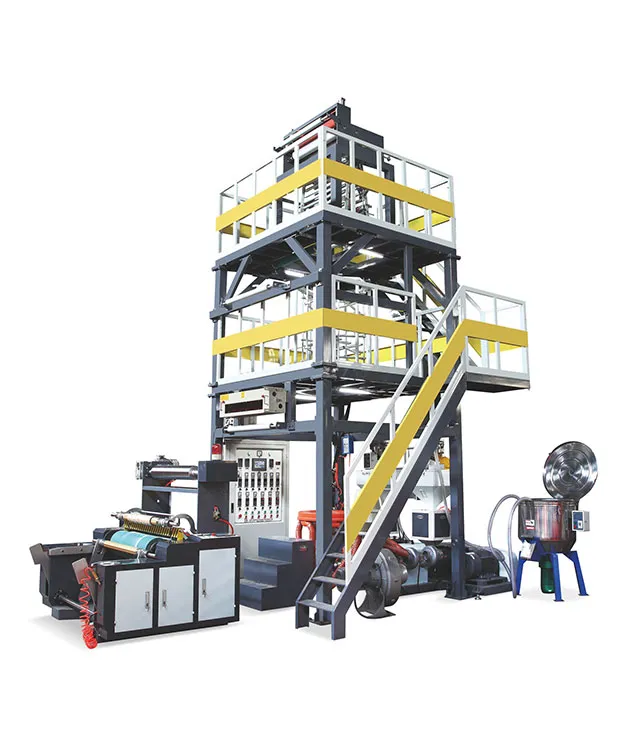
On the flip side, multi-layer co-extrusion blowing lines integrate multiple extruders, independent flow control modules, and composite die heads that fuse different polymer materials in one continuous process. The added hardware naturally raises operational complexity. Operators must master layered material ratio adjustment, temperature zoning control, and tie-layer compatibility testing to avoid delamination or uneven film thickness.
From my on-site observation at dozens of film factories, small-scale producers focusing on disposable packaging waste nearly 15% of daily working hours when forced to operate multi-layer equipment for basic film tasks. Meanwhile, high-end packaging manufacturers struggle with product defects when relying on monolayer lines to meet barrier and durability standards. This fundamental mismatch is why scenario-based selection always beats blind equipment upgrades.
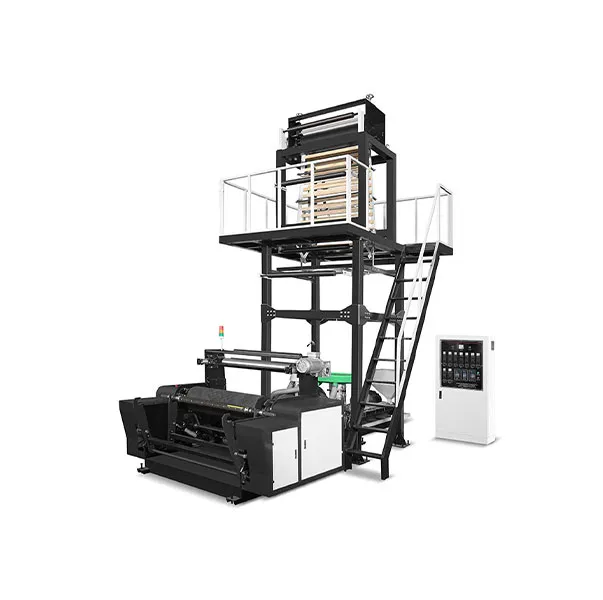
Cost is always the decisive factor for small to mid-sized manufacturers, and the gap between the two line types is far wider than most buyers anticipate. Industry procurement data shows monolayer production lines cut initial purchase costs by 40% to 60% compared with equivalent-spec multi-layer models. For startups or regional factories focusing on daily plastic bags, agricultural mulch film, and general industrial wrapping, this lower entry barrier eases cash flow pressure and shortens the payback cycle.
Beyond upfront spending, low-maintenance film production units built on monolayer designs keep long-term overhead low. Fewer mechanical components mean fewer wearing parts, lower electricity consumption per ton of finished film, and reduced reliance on professional after-sales support. These small, cumulative savings create stable profit margins for mass, low-difficulty production.
Multi-layer lines demand heftier long-term spending, including regular calibration of co-extrusion modules, higher energy consumption for multi-point heating, and customized replacement parts. Yet they deliver hidden cost advantages in raw material usage. By pairing cost-effective recycled polymers as core layers with high-purity outer protective layers, operators can slash material costs by 30% without sacrificing film quality.
No equipment is universally superior; value only emerges when hardware aligns with production targets and end-market needs. Monolayer setups shine in standardized, high-volume production scenarios with basic performance requirements. Common applications include regular shopping bags, construction protective film, general agricultural coverings, and non-food industrial wrapping. These products only require basic tensile strength and weather resistance, making extra layered functions entirely unnecessary.
Multi-layer co-extrusion technology dominates high-value, performance-sensitive sectors. high-barrier composite packaging film for frozen food, medical supplies, and chemical products depends on layered structural design to block oxygen, moisture, and ultraviolet rays. Thin-gauge lightweight packaging, printable lamination film, and leak-resistant liquid packaging also rely on multi-layer fusion to balance softness, toughness, and surface finish.
Market trends further widen this scenario divide. As global sustainable packaging policies tighten, multi-layer lines support downgauging technology—producing thinner yet stronger films to reduce plastic usage. Monolayer lines, by contrast, remain the better fit for regions with loose environmental rules and strong demand for affordable, conventional plastic film.
Film quality differences originate from structural design, directly affecting product competitiveness and client approval rates. Single-layer films use a single polymer formula, leading to balanced but mediocre overall performance. It is hard to balance multiple attributes at once—boosting hardness often reduces flexibility, while improving transparency weakens puncture resistance. For manufacturers with fixed, single-product lines, this limitation rarely causes issues, but it blocks expansion into diversified orders.
Multi-layer structures break through formula limitations by assigning different functions to independent layers. Outer layers prioritize printing adaptability and anti-scuff performance, middle layers provide barrier or structural strength, and inner layers focus on heat sealing and food contact safety. This targeted layered optimization explains why multi-layer films outperform monolayer alternatives by thousands of times in oxygen and moisture resistance, per third-party packaging material tests.
Customization is another key advantage of advanced co-extrusion lines. Modern buyers increasingly demand personalized film colors, anti-static properties, biodegradable blending, and anti-fog functions. Flexible multi-layer equipment can adjust layer combinations and material ratios to meet personalized demands, while monolayer lines face major restrictions in formula modification and functional upgrading. For manufacturers aiming to expand high-margin customized orders, production line scalability becomes non-negotiable.
Many manufacturers delay equipment updates due to fear of wrong choices, but a clear comparison of core strengths eliminates decision-making confusion. Monolayer blowing equipment offers simple operation, low failure rates, and low overall costs, making it the rational pick for budget-limited startups and factories focused on mature, low-value film products. Its compact footprint also suits small workshops with limited factory space.
Multi-layer co-extrusion units, though costlier and more complex, unlock higher product added value, stronger market adaptability, and better compliance with global packaging upgrade trends. Over a 3 to 5-year operation cycle, most multi-layer line buyers recoup extra investment through premium order pricing and raw material savings.
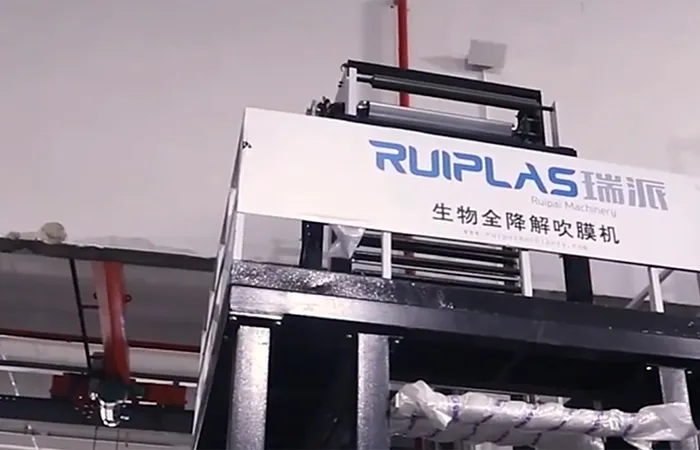
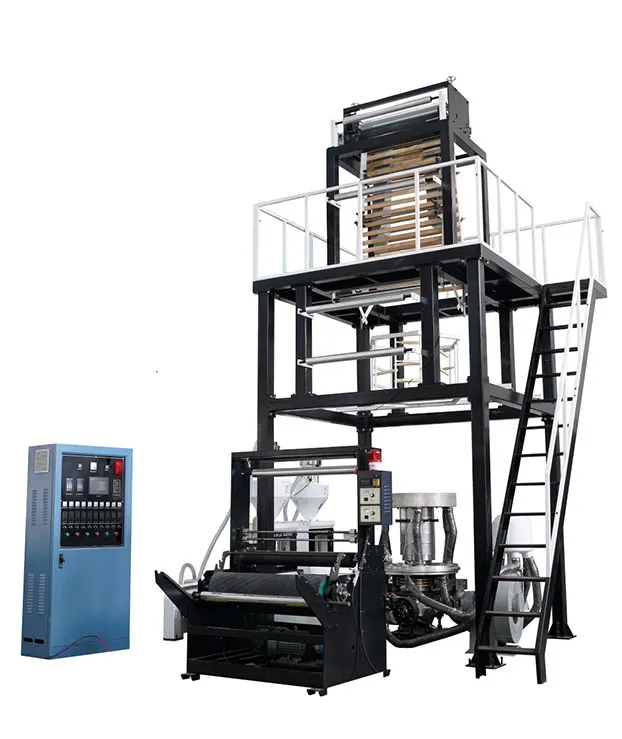
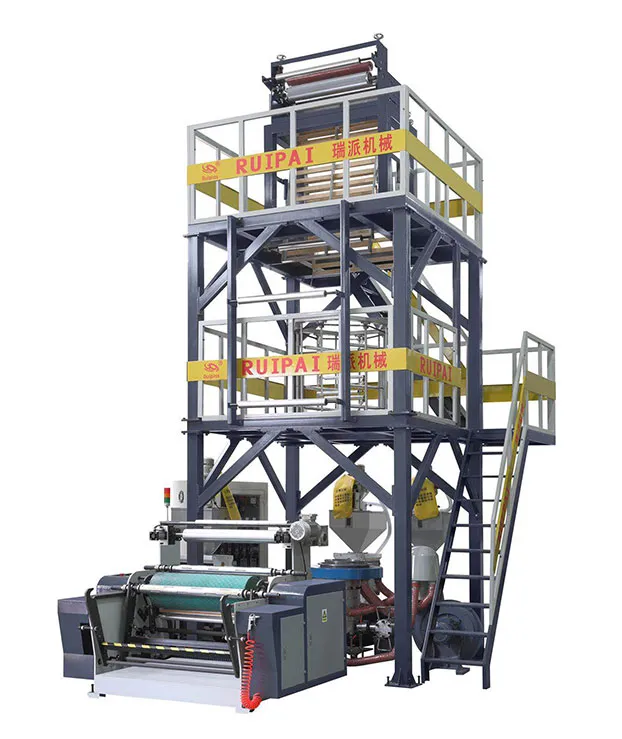
When weighing these options, a reliable manufacturing partner’s comprehensive service cannot be overlooked. In this field, a well-engineered Film Blown Machine integrates mature monolayer and multi-layer modular designs, filling the gap between entry-level affordability and high-end performance. Unlike generic machinery that offers fixed configurations, RUIPAI focuses on tailored upgrades: adding simplified co-extrusion modules for small factories or optimizing full 5-layer structures for large-scale packaging enterprises.
Compared with low-cost generic machinery on the market, branded industrial blowing equipment prioritizes component durability, energy-saving design, and easy post-upgrade expansion. This avoids the common pitfall of early equipment elimination caused by market demand changes. For manufacturers unsure of future product expansion directions, modular customizable designs effectively balance current needs and long-term development.
After analyzing cost, scenarios, quality, and customization, the selection logic becomes clear. Choose a mono-layer blown film line if you run small-batch, standardized production, have limited upfront capital, and focus on stable local bulk orders. It delivers steady returns with minimal operational risks and technical thresholds.
Opt for a multi-layer co-extrusion line if you target high-end food packaging, medical supplies, export-oriented orders, or plan to expand sustainable lightweight film product lines. Though the initial investment is higher, it builds long-term technical barriers and profit space in a fiercely competitive market.
The global flexible packaging industry will keep evolving toward high barrier, low carbon, and high customization. Whether you stick to monolayer stability or embrace multi-layer upgrading, the key is to select equipment that matches your operational scale, order structure, and 3–5 year development plans. Avoid following industry trends blindly, and prioritize practical production efficiency and profit stability above all.
Environmentally friendly materials
Integrated production lines
Maximising your return on investment
GET A QUOTE


 English
 Español