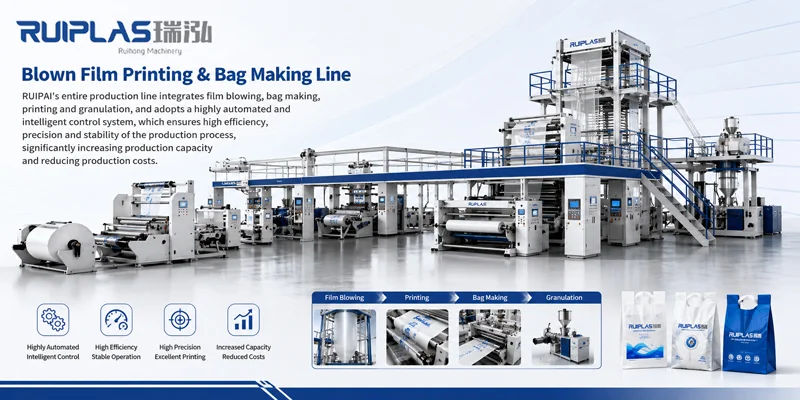
When your production line combines blown film extrusion, surface printing, and bag making in one continuous flow, even a small misalignment can cascade into wrinkled film, misregistered prints, or sealing failures. Before troubleshooting each station separately, you need a systematic method to balance line speed, tension, and temperature across all three processes. This article provides a step‑by‑step decision framework to help you identify the most common performance bottlenecks and correct them without guesswork.
A fully integrated line is not three independent machines – it is one interdependent system.
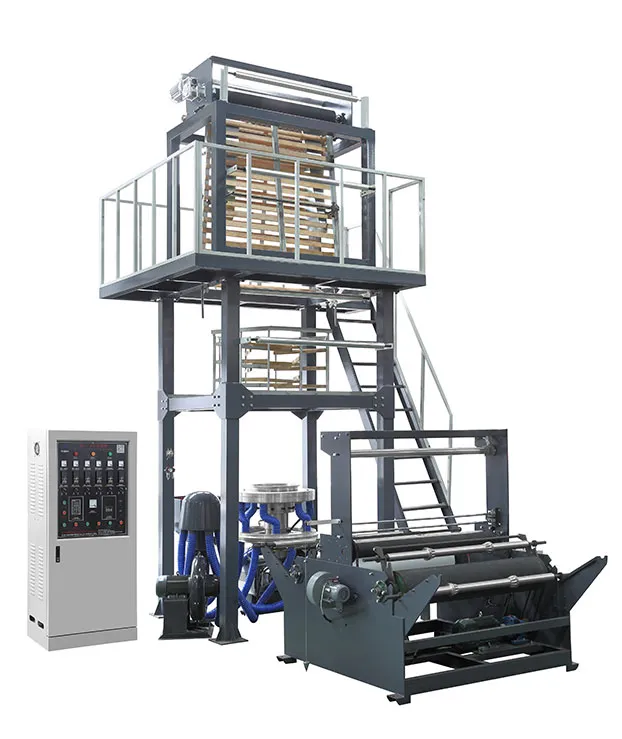
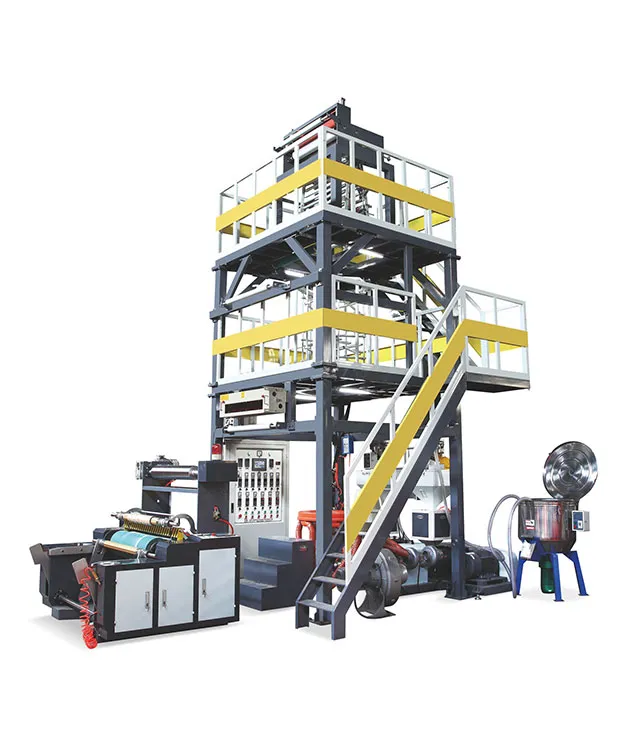
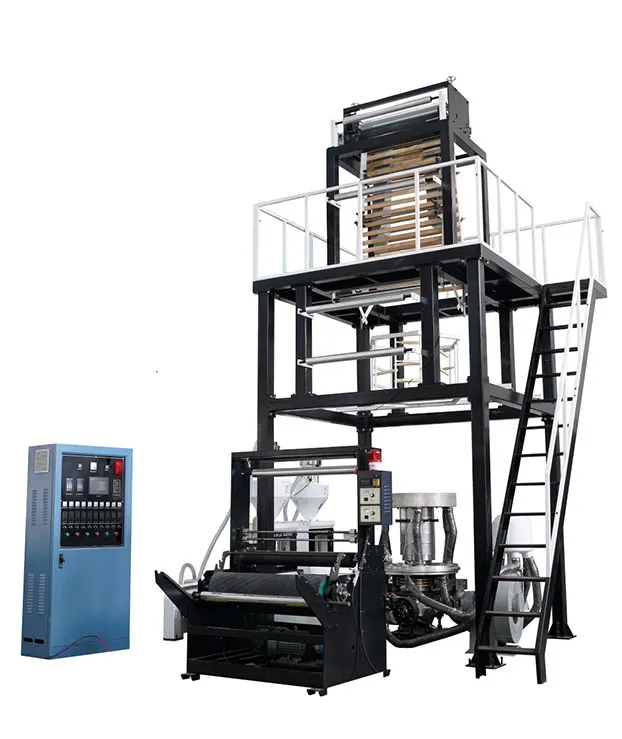
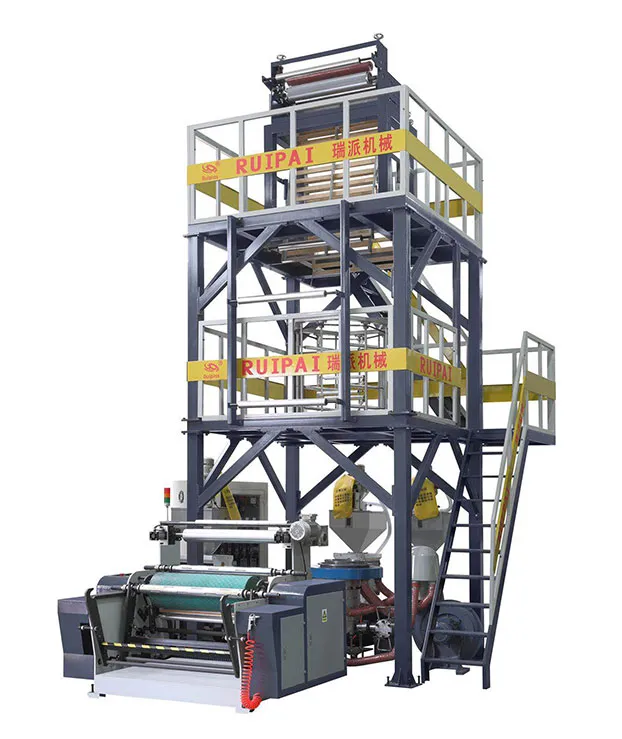
Blown film tower determines film thickness profile, bubble stability, and lay‑flat width.
Printing unit (usually flexographic) demands consistent web tension and a static‑free surface.
Bag making station relies on accurate registration marks and uniform seal‑jaw temperature.
If the blown film die is slightly off‑center, the printing cylinders will struggle to maintain register, and the bag maker will cut unevenly or create weak seals. Therefore, the first diagnostic step is always to start at the film extrusion and work downstream.
External authority reference: According to a 2023 technical paper by the Society of Plastics Engineers (SPE), more than 60% of print‑registration defects in blown film lines originate from gauge band variations produced by the die, not the printer itself. (SPE – Film Extrusion Division)
Use this sequence to systematically improve line performance.
What to check: Air ring uniformity, frost line height, and collapsing frame alignment.
Why it matters: An asymmetric bubble creates uneven lay‑flat edges, which will cause “baggy” webs and misaligned printing.
How to verify: Measure the film thickness across the web every 30 minutes for 2 hours. Variation should be < ±5% for most packaging films.
The extruder centerline, die head center, and traction roller line must be perfectly coaxial. Even a 1‑2 mm offset can generate side‑pull, leading to:
One‑sided printing pressure
Premature anilox roll wear
Curling in the bag stack
Many line operators ignore this because they assume the mechanical installation was permanent. However, floor settlement or thermal expansion can shift alignment over time. Re‑check semi‑annually.
Printing ink curing (especially water‑based or solvent‑based) requires a minimum residence time in the dryer. If you increase extrusion speed but the dryer length is fixed, the result is smudged prints or ink transfer to idler rolls.
Practical rule: For each 10 m/min speed increase, verify that the remaining solvent in the printed film is below 5 mg/m² (using a simple residue test).
Quick fix: Install a longer dryer section or switch to high‑solids inks with faster curing.
As speed rises, the seal jaws have less contact time with the film. Use a seal‑time vs. temperature table:
| Line speed (m/min) | Recommended seal jaw temp (°C) for LDPE | Seal pressure (bar) |
|---|---|---|
| 40 – 60 | 120 – 135 | 3.5 – 4.0 |
| 60 – 80 | 135 – 150 | 4.0 – 4.5 |
| 80 – 100 | 150 – 165 (with Teflon cover) | 4.5 – 5.0 |
Exceeding the upper temp range increases film degradation and jaw sticking.
Many production managers face the same dilemma: push for higher output or preserve print definition. The table below compares two typical operating modes for a blown‑film‑printing‑bagging line.
| Performance aspect | High‑speed mode (80‑100 m/min) | Balanced mode (50‑70 m/min) |
|---|---|---|
| Film thickness variation | ±7‑9% (acceptable for industrial bags) | ±3‑5% (needed for food packaging) |
| Print registration accuracy | ±1.5 mm (clear for large text/logo) | ±0.5 mm (fine graphics, barcodes) |
| Bag seal integrity | Passes drop test but may have occasional leakers | Consistent peel strength |
| Energy per kg of film | 15‑20% lower | Baseline |
External benchmark: Data from Plastics Technology’s 2024 Extrusion Survey shows that integrated line operators who run above 75 m/min with narrow‑web printers report 22% more unscheduled downtime due to registration corrections. Adjusting your speed target to match the weakest process step (often the printer’s drying capacity) reduces that downtime significantly.
A typical scenario: You already have a blown film + bag making line, and you want to run PBAT/PLA blends while keeping the existing printing unit.
Challenges observed in many plants:
Biodegradable resins have lower melt strength → bubble instability at speeds above 50 m/min.
Low surface energy of bio‑films → poor ink adhesion if no corona treatment is applied before printing.
Softer bags → sealing jaws need lower pressure and longer cooling time.
Practical adjustments:
Add a corona treater right after the nip rollers and before the printing station. Target ≥42 dynes/cm.
Reduce line speed to 45‑55 m/min initially, then gradually increase while monitoring seal integrity.
Use chilled seal jaws (water circulation below 25°C) to prevent sticking.
Related guide: For a deeper dive into screw and material upgrades for biodegradable resins, see our article “Screw & Material Upgrade for New Materials” .
Once you have identified the performance bottlenecks in your specific line (e.g., drying capacity, alignment drift, or seal temperature limits), the logical next step is to compare how different machine configurations address those limitations.
For example, lines equipped with servo‑driven traction and automatic registration control can maintain print accuracy even at 90 m/min, while those with longer dryer tunnels handle higher speeds without smearing.
You can review how integrated lines are engineered for high‑speed printing and bag making in the Film Blown, Printing & Bag Making Complete Line overview (product series page). For industry‑specific setups (e.g., heavy‑duty industrial bags vs. food‑grade small pouches), the Customized Solutions for Packaging page provides application examples.
To further deepen your understanding of integrated line performance, we suggest the following topics (articles available on this site):
How to Diagnose Gauge Band Variations in Blown Film (die design & air ring tuning)
Print Registration Drift: 5 Mechanical Checks Before Changing Software
Seal Jaw Materials for High‑Speed Biodegradable Bag Making
Energy Consumption Comparison: Centralised vs. Independent Drive Configurations
Retrofit Guide: Adding an In‑line Corona Treater to an Existing Line
This guide is intended as a decision‑support tool. Every production environment is different; always consult your line manufacturer for specific parameter recommendations.
Environmentally friendly materials
Integrated production lines
Maximising your return on investment
GET A QUOTE


 English
 Español