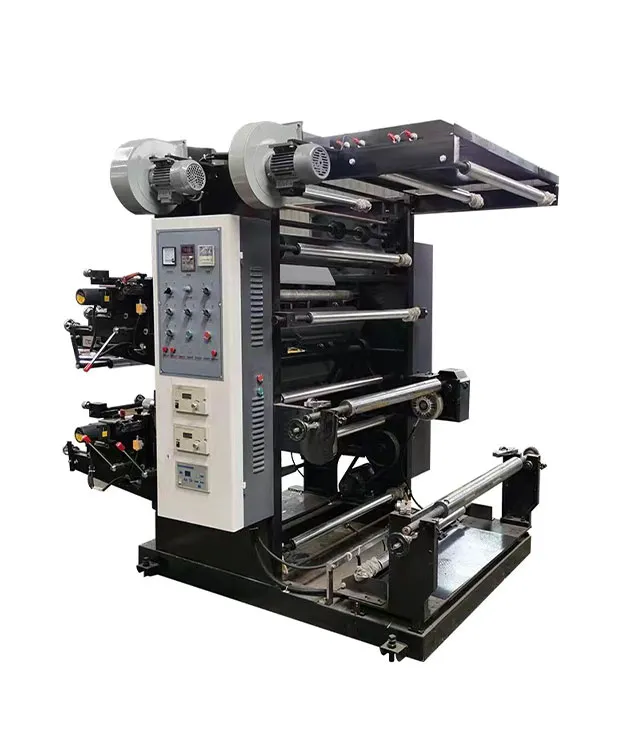
You’ve dialed in ink viscosity, checked anilox rolls, and verified plate mounting. The press runs beautifully—until the roll runs out. The next roll prints with registration drift, ink mottle, or edge wrinkles. The problem isn‘t your Printing Machine; it’s the film underneath. A printing press cannot correct substrate defects. Uneven film thickness, poor roll flatness, inconsistent surface energy, or gauge bands will transfer directly to the printed result. Before you chase defects on the press, look upstream at the blown film extrusion process. A well‑controlled extruder, stable bubble cooling, and precise tension management produce film that prints predictably roll after roll. This guide explains how blown film parameters affect downstream print quality and what to look for when buying extrusion equipment.
Printing Machine registration depends on consistent web thickness. When film thickness varies across the roll—thicker on one edge, thinner on the other—the substrate stretches unevenly through the print nip. The result is color‑to‑color registration drift that changes as the roll unwinds.
What to look for in blown film equipment. Internal Bubble Cooling (IBC) systems stabilize the bubble diameter in real time, reducing gauge variation. RUIPAI‘s IBC‑equipped lines maintain thickness uniformity through closed‑loop control. A precise air ring with adjustable zoning also helps keep the frost line level around the entire bubble circumference.
The gauge band effect. Localized thick spots (gauge bands) create repeating print defects that align with the die’s rotation. If the blown film machine lacks rotating haul‑off, those thick bands stay at the same position across the roll, causing a print defect that appears in every repeat length. For critical printing applications, specify a rotating haul‑off that averages thickness variation across the roll width.
Polyolefin films (PE, PP) have low surface energy, typically 30–32 dynes/cm. Water‑based or UV inks require 38–42 dynes/cm for reliable adhesion. Without adequate surface treatment, the ink beads up or flakes off. Corona treatment raises surface energy by creating polar groups on the film surface. For a Printing Machine running water‑based inks, the film must have uniform, stable treatment across the full web width. Check that the blown film line includes a corona treater with ceramic electrode rolls and gap adjustment. For high‑speed printing of surface‑sensitive materials like metallized film, consider in‑line plasma treatment. RUIPAI offers integrated corona treatment as a functional option on their blown film lines.
Film that enters the printing press with edge wrinkles or telescoping rolls will never produce acceptable print. Wrinkles cause ink voids; telescoping creates tension spikes that shift registration.
Causes of poor roll geometry. Uneven winding tension, insufficient core grip, or bowed idler rolls. On the blown film line, the winder must maintain consistent tension as roll diameter builds. Taper tension controls gradually reduce torque to prevent core crush and edge strain.
What to specify. A surface winder with closed‑loop tension control and lay‑on roll pressure adjustment. For films that stretch easily (LLDPE, metallocene), a center winder with load cell feedback is recommended. RUIPAI‘s lines offer customizable winding systems with slitting options to produce print‑ready rolls directly from the extrusion line.
Print defects sometimes originate as extrusion defects. Haze, gels, or fisheyes in the film create white spots or voids in solid print areas. These come from poor melting or degraded polymer. The blown film extruder must achieve complete plastication without overheating. Look for screws with barrier or mixing sections that homogenize the melt before exiting the die. For heat‑sensitive materials like biodegradable PLA, precise temperature control (±1°C) across zones is essential. Rapid, uniform bubble cooling locks in clarity and prevents crystallinity that causes haze. RUIPAI‘s PVA water‑soluble monolayer film blowing machine is designed for specialty materials requiring narrow processing windows—capabilities that also benefit high‑clarity packaging films.
Not every printing application needs the same film. High‑speed gravure printing demands exceptional roll flatness and low static. Digital printing requires consistent surface energy with no slip additives migrating to the surface. Flexible packaging with in‑line rotogravure needs film that withstands higher web tensions without stretching.
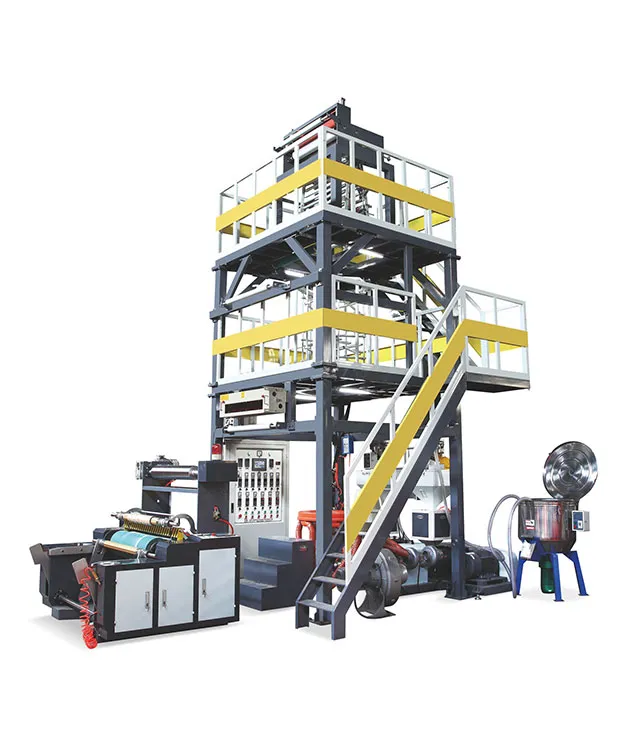
How equipment customization helps. The blown film line should be configured for the specific film structure you print: mono‑layer for simple bags, ABA for cost‑effective middle layers, or ABC for barrier films. Key specifications include screw combinations matched to your resin mix, die diameter for target lay‑flat width, cooling capacity for line speed, and winding tension range for your substrate modulus. RUIPAI has been customizing blown film lines for over 20 years, tailoring screw design, die geometry, and IBC systems to specific film types including food packaging, agricultural film, ultra‑thin cling film, and industrial wrap.
Q: Why does film from the same supplier sometimes print well and other times poorly? A: Variations in extrusion parameters—melt temperature, bubble cooling, winding tension—change from run to run. Suppliers with automated IBC and closed‑loop tension control produce more consistent film. Ask for certification of thickness variation (±% tolerance) and surface energy (dynes/cm) with each shipment.
Q: Can I run surface‑printed film without corona treatment? A: Not with water‑based or UV inks. The ink will not wet out. For solvent‑based inks, some adhesion is possible, but corona treatment improves consistency. If the blown film line includes a corona treater, ensure it‘s rated for your press speed (treatment level drops at higher line speeds).
Q: How does film thickness variation appear on the printed roll? A: Thick spots cause the web to overstretch under tension, creating local print elongation that looks like a misregistered blotch. Thin spots cause the web to flutter, leading to intermittent ink voids or scuffing. A thickness variation exceeding ±5% is usually visible as print distortion.
Q: What’s the minimum surface energy for good ink adhesion? A: For most water‑based flexo inks, 38 dynes/cm is the threshold; 40–42 dynes/cm is preferred. For UV inks, 42–44 dynes/cm provides reliable adhesion. Use dyne test pens on the film before the print run. If the film supplier can‘t guarantee treatment, request corona treatment on the extruder line before winding.
When consistent print quality depends on the film substrate, the extrusion equipment must deliver uniformity roll after roll. RUIPAI manufactures blown film lines designed for stable, repeatable film properties that downstream Printing Machine operations can rely on.
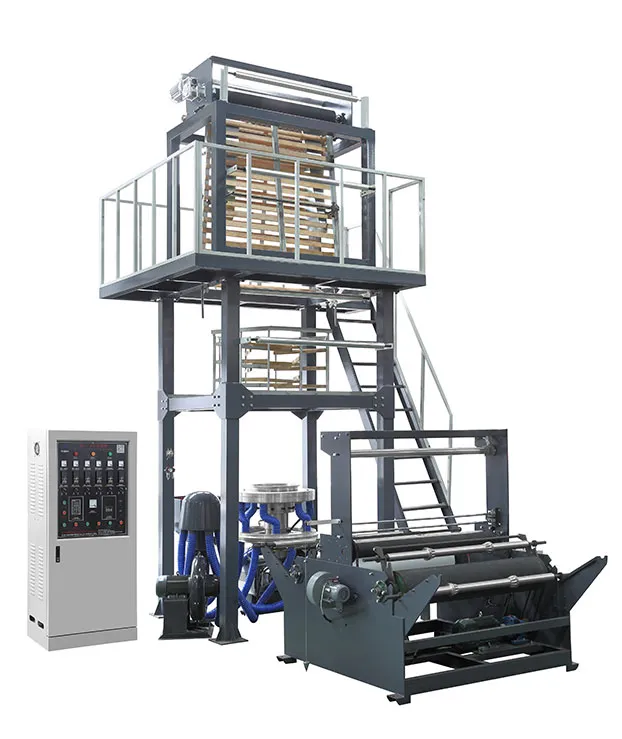
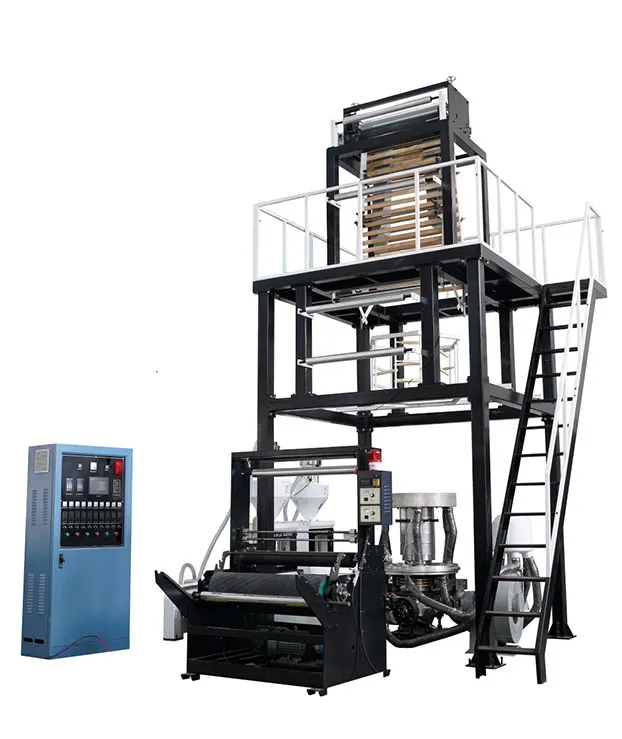
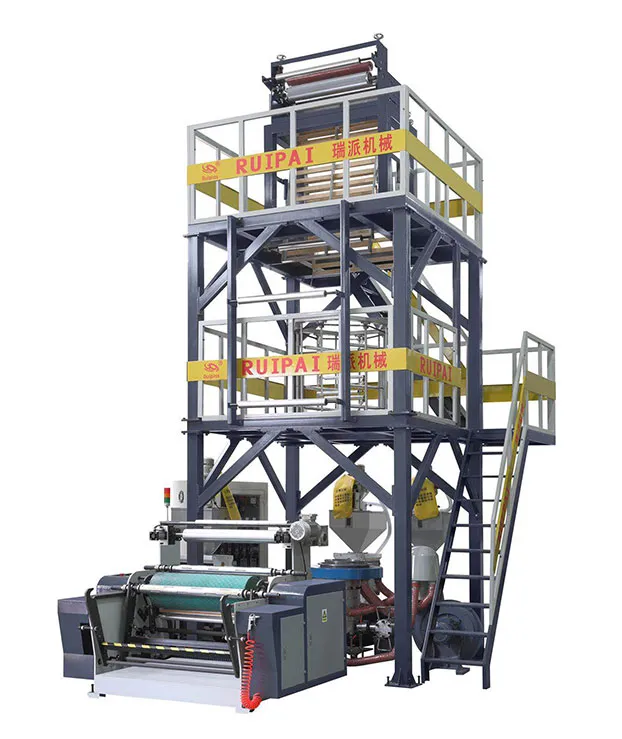
RUIPAI offers high‑speed monolayer film blowing machines for LDPE, LLDPE, HDPE, and PP, producing films for compostable bags, food packaging, agricultural mulch, and disposable hygiene products. For specialty applications, the PVA water‑soluble monolayer film blowing machine supports biodegradable and water‑soluble materials used in detergent pods, agrochemical packaging, embroidery backing, and medical laundry bags. Key technical features include IBC (internal bubble cooling) systems for thickness uniformity, rotating haul‑off to average gauge variation, corona treatment for surface energy control, and customizable winding with slitting for print‑ready rolls. All key components are sourced from top international brands (SKF, FAG, Siemens) to ensure long life and high reliability. RUIPAI provides installation, commissioning, and training services, and offers customization of frame height, color, logo, and functional options such as in‑line printing, laminating, slitting, and edge material recycling systems.
For a Printing Machine operator, film that arrives flat, treated, and uniform means fewer press stops, less waste, and faster job changeovers.
→ Request a quote from RUIPAI for a blown film line matched to your printing needs — Share your target film width, thickness range, output speed, and whether you require in‑line corona treatment or slitting. Their technical team will recommend extruder sizes and winding configurations that deliver print‑ready rolls.
Environmentally friendly materials
Integrated production lines
Maximising your return on investment
GET A QUOTE


 English
 Español