ou’re running a blown film line, and material costs are eating into your margins. But you can’t just switch to cheaper resin — the film won’t hold up. A Film Blown Machine with ABA co‑extrusion technology solves that. It uses two extruders to produce three layers with an A‑B‑A structure: the outer A layers (same material) provide strength, sealability, and print surface; the inner B layer can be filled with calcium carbonate or recycled content to reduce material expense. Same film performance. Lower cost per kilogram. This guide explains how it works, where ABA fits versus ABC or monolayer lines, and what to consider before buying.
ABA co-extrusion uses two extruders and a specially designed die head with three flow channels. Extruder A supplies both outer layers (inner and outer surfaces of the bubble). Extruder B supplies the middle layer. The melt from extruder A splits into two separate flow paths inside the die — one for the outer surface, one for the inner surface — while extruder B feeds the core. This split‑flow design is what makes ABA possible with only two extruders instead of three.
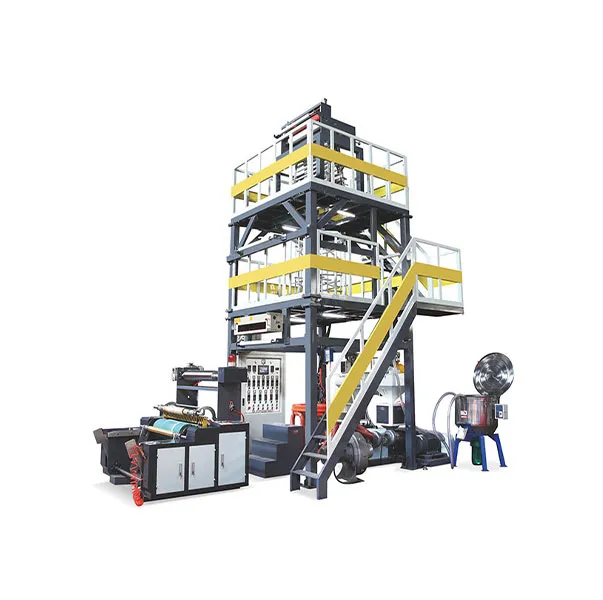
The middle layer never contacts the outside world. It doesn’t need to seal, print, or look good. So you can load it with up to 50% calcium carbonate (CaCO₃) or recycled material without affecting the film’s surface properties or weldability. The outer A layers — made from virgin LDPE or LLDPE — preserve strength and heat seal characteristics. Some producers report material savings of 12% or more without compromising film quality.
Layer distribution is expressed as a ratio of outer A : core B : inner A. Most ABA lines allow customizable layer ratios from 1:1:1 up to 1:8:1, depending on the die design and material combination. A 1:4:1 ratio means 16% of the film thickness is the outer A layer, 68% is core B, and another 16% is inner A — total 100%. Adjusting the ratio changes both material cost and film properties.
| Feature | Monolayer | ABA | ABC (Three Extruders) |
|---|---|---|---|
| Extruder count | 1 | 2 | 3 |
| Layer structure | Single | A-B-A (symmetric) | A-B-C (asymmetric) |
| Core layer filler capability | N/A | Yes — up to 50% CaCO₃/recycled | Yes, plus third distinct material |
| Surface materials | One type | Same on both sides | Can differ between sides |
| Best for | Basic packaging | Cost-sensitive commodity bags | Specialty barrier or three-color films |
| Typical film examples | Trash liners, pallet wrap | T‑shirt bags, grocery sacks, liners | Lamination films, medical, agricultural |
ABA is for high-volume, cost-driven applications where the core can carry filler. ABC is for specialized barrier structures (e.g., EVOH for oxygen barrier) or three-color films where each side needs different materials.
LDPE (Low‑Density Polyethylene) — Excellent transparency, sealability, and flexibility. Ideal for outer A layers in general packaging films.
LLDPE (Linear Low‑Density Polyethylene) — Higher tensile strength and puncture resistance than LDPE. Outer A layers for heavy‑duty bags or stretch film applications.
HDPE (High‑Density Polyethylene) — Stiffness and high tensile strength. Outer A layers for grocery sacks, T‑shirt bags, and carryout bags.
CaCO₃ masterbatch — Common filler for the core B layer to reduce material cost. Can be incorporated at 20%–50% of the middle layer without sacrificing mechanical properties of the overall film.
Recycled content — Post‑industrial or post‑consumer recycled PE can be used in the core B layer, reserving virgin material for the functional outer layers. Research shows ABA machines can incorporate over 70% recycled material and calcium carbonate in the core layer. The specially designed screws and die structure enable high fill rates while maintaining process stability.
Biodegradable resins (PLA, PBAT) — Outer A layers for compostable bag applications. Core B layer can still carry filler, further reducing cost of eco‑friendly products.
Edge trim and startup waste can be ground and fed back into the core B layer. This cuts nearly 100% of material waste to landfill. Run the regrind through a dedicated gravimetric feeder to maintain consistent layer distribution — excessive regrind in the core can alter melt flow and bubble stability.
Production capacity depends on screw diameter, film width, thickness, and layer ratio. RUIPAI’s standard blown film lines range from 50 kg/h to 500 kg/h, with custom configurations for larger operations. For reference:
A compact ABA line with 45mm + 55mm screws typically produces 45–200 kg/h depending on materials. Film width ranges from 100mm to 5,000mm and thickness from 0.01mm to 0.20mm. A high‑output three-layer co‑extrusion line with 95mm + 110mm + 95mm screws can reach up to 800 kg/h at 2,200mm width and 50 microns.
Three parameters make or break an ABA run. Start with these baselines and adjust from there:
| Parameter | Typical Range / Setting | What Can Go Wrong |
|---|---|---|
| Extruder A temperature (outer layers) | 160–190°C (LDPE/LLDPE) | Too low = poor melt, gels; too high = degraded polymer |
| Extruder B temperature (core layer with filler) | 170–200°C (higher to disperse CaCO₃) | Poor dispersion of filler at low temp; thermal degradation at high temp |
| Blow‑Up Ratio (BUR) | 2:1 to 3.5:1 (film bubble expansion) | Too low = poor strength orientation; too high = bubble instability |
| Frost Line Height | Adjusted per material – set by visual | Too high = slow cooling, hazy film; too low = freeze marks |
| Layer ratio (A:B:A) | 1:4:1 to 1:8:1 | Varies by application — consult your gravimetric dosing system |
The most common mistake in ABA operation is setting the B‑layer temperature too low. Calcium carbonate masterbatch needs slightly higher heat to disperse evenly. Under‑dispersed filler creates “fish eyes” — visible specks that ruin printability and seal strength.
A Film Blown Machine is a long‑term asset — here’s what experienced operators check before buying.
IBC (Internal Bubble Cooling) with ultrasonic sensors. This system stabilizes the bubble diameter in real time, maintaining consistent film lay‑flat width and reducing gauge variation. Without IBC, output is limited by bubble cooling capacity.
Gravimetric dosing for precise layer ratios. Weight‑controlled feeders on each extruder are essential for maintaining consistent layer distribution when running high filler or recycled content in the core.
Energy efficiency. Three‑layer extrusion consumes more power than monolayer. Look for high‑efficiency variable frequency motors (reducing idle waste by ~30%), ±1°C precision temperature control to prevent overheating, and insulated barrel designs to reduce heat loss. Actual data shows well‑designed machines save 15–25% energy per ton of film compared to industry averages.
Ease of cleaning. Running CaCO₃ in the core layer leaves white residue in screw channels and die flow paths. A die head with self‑cleaning flow channel geometry from high‑pressure screw scouring minimizes waste and downtime — look for conical die designs optimized with thermal dynamics and 3D simulations.
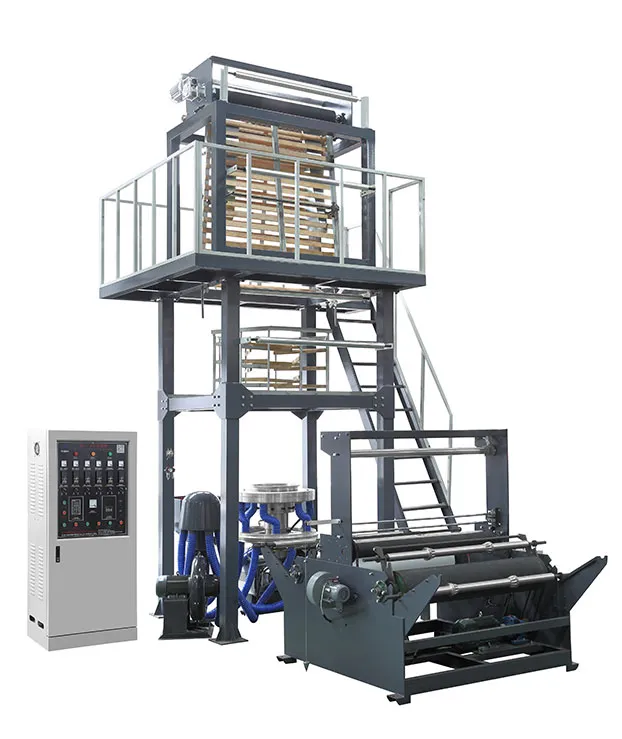
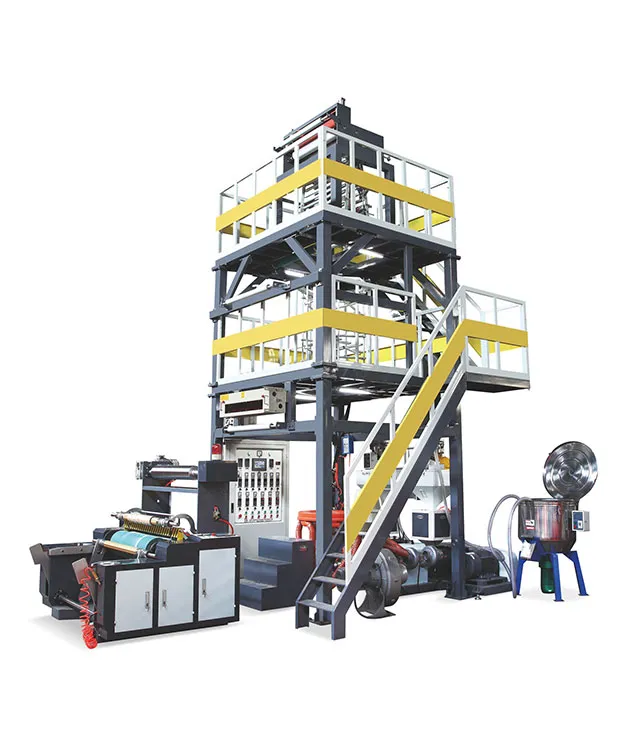
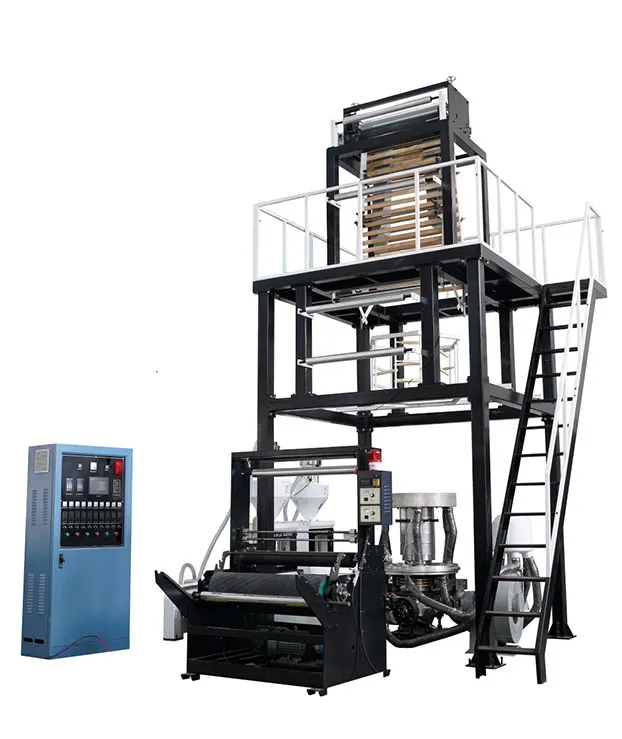
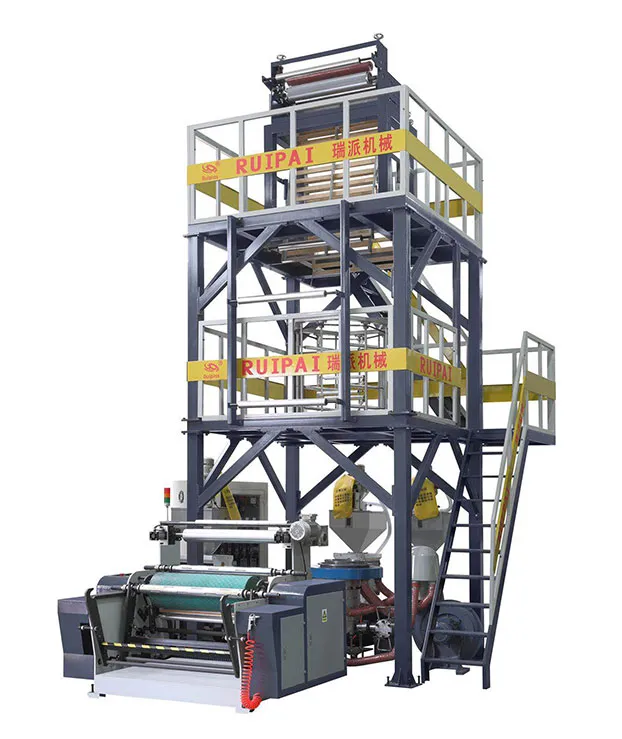
The ABA Three-Layer Film Blowing Machine from RUIPAI is designed for producers who want to cut material cost without cutting corners on film quality. The two‑extruder setup runs A and B materials, with the B motor capable of feeding over 70% recycled material and calcium carbonate into the core. High‑speed dual‑alloy screws in the forced‑feeding extruders provide hardness and wear resistance — lasting 3–5× longer than standard screws when running abrasive fillers. The three‑layer conical die, optimized with thermal dynamics and 3D simulations, features self‑cleaning channels that reduce waste and downtime. Production capacity ranges from 50 kg/h to 500 kg/h, with custom options for higher throughput. The company holds CE, ISO 9001, and SGS certifications; offers a 12‑month warranty on core components; and maintains 24/7 online technical support with spare parts stocked in five regional warehouses globally.
Can the same machine run both ABA and ABC configurations? Generally no — the die head flow channel geometry is different. But some multi‑purpose machines allow die head swaps. RUIPAI offers separate dedicated ABA and ABC platforms.
What’s the minimum production volume to justify an ABA line? If you run over 500 tons of film per year, the material savings from adding 20–30% filler to the core will typically cover the machine payment within 12–18 months. Below that, the ROI window may be longer.
How often should the screw be pulled for cleaning? Running CaCO₃ or recycled content in the B layer means regular purging and cleaning. Every 200–300 operating hours for the B extruder, unless your screw has a special wear‑resistant coating.
Does ABA film recycle differently? The three layers are all polyolefin‑based (with CaCO₃ filler), so standard PE recycling streams accept it. The filler becomes ash in the recycling process — acceptable at typical levels.
【Request a quote from RUIPAI for the ABA Three-Layer Film Blowing Machine】— Share your target daily output in kg, film width range, thickness, and whether you intend to run recycled content or CaCO₃ filler. Their engineering team will recommend the right screw configuration and die size for your materials.
Environmentally friendly materials
Integrated production lines
Maximising your return on investment
GET A QUOTE


 English
 Español