You're running a packaging operation, and the process has always been two steps—seal the film, then cut it. Each step means another station, another potential for misalignment, another opportunity for rejects. A bag making machine that combines sealing and cutting into a single integrated operation changes that workflow entirely. The side sealing bag making machine was engineered with that integration in mind: heat seal and hot cutting happen simultaneously, producing finished bags with clean, strong edges in one continuous pass. This article walks through what makes this integrated approach a practical choice for flexible packaging—from the alignment advantages of simultaneous sealing and cutting to the temperature control that balances seal strength and cut quality.
Q: What's the advantage of combining sealing and cutting in one step?
A: When sealing and cutting happen simultaneously, the seal and the cut are always perfectly aligned. With separate sealing and cutting stations, any misalignment between the two operations can result in weak seals or uneven edges. The integrated process eliminates this alignment issue entirely.
Q: Does combining sealing and cutting compromise either operation?
A: No. The welding knife temperature is adjustable from 0-300℃, giving operators control over the seal strength for different film materials. The heat seal creates a permanent bond while the hot cutting produces clean, burr‑free edges—all in the same cycle. The process works because the sealing and cutting happen at the same location, with the same heat source delivering both functions.
The side sealing bag making machine is suitable for heat seal and hot cutting of BOPP, OPP, and PE film. The integration of sealing and cutting isn't just a convenience—it's a fundamental design choice that affects product quality and production efficiency.
When sealing and cutting are performed by separate stations, the film must travel between them. Any variation in film tension, roller alignment, or machine timing can cause the cut to fall slightly before or after the seal. The result is either a weak seal that's too close to the edge or an uneven edge that looks unprofessional. The integrated process eliminates this variable entirely.
The welding knife performs both sealing and cutting functions at the same point in the production line. The film is sealed and cut in a single cycle, with the seal and the edge perfectly aligned. This ensures that every bag has a strong, consistent seal positioned exactly where it should be.
The heat seal and hot cutting process uses heat to both bond the film layers and sever the material. The result is a finished bag with a clean edge and a strong seal—without the ragged edges or weak spots that can occur with separate operations.
The welding knife temperature is adjustable from 0-300℃. This range covers the different thermal requirements of BOPP, OPP, and PE film. The temperature needs to be high enough to create a strong molecular bond between the film layers, but not so high that it causes burn-through or discoloration. The adjustable temperature gives operators the control to balance seal strength and cut quality for each material.
Hot cutting uses heat to sever the film, melting through the material rather than shearing it. This produces clean, smooth edges that don't have the rough burrs that can occur with cold cutting. For retail packaging, clean edges contribute to a professional appearance that reflects well on the product inside.
When sealing and cutting are separate operations, the film must travel from the sealer to the cutter. This travel distance introduces multiple opportunities for misalignment.
As the film moves between stations, tension can vary. These variations can cause the film to stretch or relax, changing the position of the seal relative to the cut. The integrated process eliminates the travel distance between stations—the seal and cut happen at the same location, so tension doesn't affect alignment.
Over time, the timing between separate sealing and cutting stations can drift. When the timing is off, the cut falls in the wrong place relative to the seal. The integrated process eliminates this timing issue because there's only one operation to time.
The machine is suitable for heat seal and hot cutting of BOPP, OPP, and PE film. Each of these materials benefits from the integrated process in different ways.
BOPP (biaxially oriented polypropylene) offers high clarity and good printability. The integrated sealing and cutting process ensures that the seal is consistent and the edges are clean—without the distortion that can occur when sealing and cutting are separate operations.
OPP (oriented polypropylene) provides strength and puncture resistance. The integrated process ensures that the seal is positioned correctly and has the full strength of the material.
PE (polyethylene) is the most widely used packaging film, offering excellent sealability. The adjustable welding knife temperature (0-300℃) allows operators to dial in the right heat for PE's lower melting point. The integrated process ensures that the seal is strong without burn‑through at the cut edge.
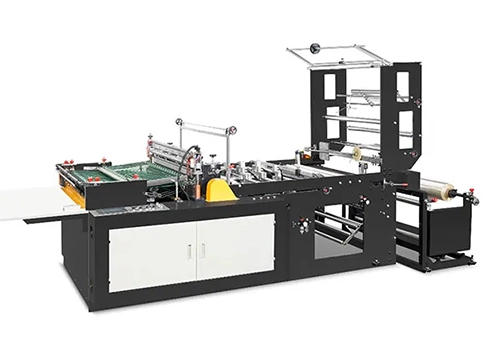
| Parameter | RQL-600 | RQL-800 | RQL-1000 |
|---|---|---|---|
| Max. Bag Sealing Width | 990mm | 990mm | 990mm |
| Max. Bag Sealing Length | 550mm | 750mm | 950mm |
| Bag Thickness | 0.01-0.10mm | 0.01-0.10mm | 0.01-0.10mm |
| Bag Making Speed | 140pcs/min | 40-140pcs/min | 40-140pcs/min |
| Welding Knife Temperature | 0-300℃ | 0-300℃ | 0-300℃ |
| Main Motor Power | 1.1kW | 1.5kW | 2.2kW |
| Machine Weight | 700kg | 900kg | 1000kg |
| Overall Dimensions | 3000×1200×1500mm | 3000×1400×1500mm | 3000×1600×1500mm |
The side sealing bag making machine serves multiple applications where seal integrity and clean edges are essential:
The machine produces bags for socks and towels. These applications require bags that hold their shape and protect the contents during shipping and display. The integrated sealing and cutting ensures that the bags are consistently sized and sealed, with clean edges that look professional.
The machine is ideal for bread bags. Bread bags need to keep the product fresh while maintaining a clean appearance. The 0.01-0.10mm thickness range covers the film weights commonly used in bread packaging, and the heat sealing ensures a secure closure with a clean, even edge.
Beyond these specific applications, the machine is suitable for a range of flexible packaging needs. The combination of BOPP, OPP, and PE film compatibility, computer-controlled length fixing, and integrated sealing and cutting makes it versatile for converters serving multiple markets.
Q: What's the advantage of combining sealing and cutting in one step?
A: The integrated process ensures that the seal and the cut are always perfectly aligned, eliminating the alignment errors that can occur when sealing and cutting are separate operations. This results in stronger seals and cleaner edges.
Q: Does the machine use the same temperature for sealing and cutting?
A: Yes. The welding knife performs both sealing and cutting functions at the same location, with temperature adjustable from 0-300℃. The temperature is set to balance seal strength and cut quality for the specific film material.
Q: What film materials can the machine process?
A: The machine is suitable for BOPP, OPP, and PE film.
Q: What bag lengths can the machine produce?
A: The three models offer maximum sealing lengths of 550mm (RQL-600), 750mm (RQL-800), and 950mm (RQL-1000).
Q: What is the maximum bag sealing width?
A: All three models support a maximum bag sealing width of 990mm.
Q: What is the bag making speed?
A: The RQL-600 runs at 140 bags per minute; the RQL-800 and RQL-1000 run at 40-140 bags per minute.
A bag making machine that combines sealing and cutting into one integrated operation is the practical choice for converters who need strong, consistent bags with clean edges. The RQL series delivers heat seal and hot cutting in a single integrated operation for perfect alignment, BOPP, OPP, and PE film compatibility for the most common flexible packaging materials, adjustable welding knife temperature from 0-300℃ for material-specific control, three models covering bag lengths from 550mm to 950mm, and computer-controlled length fixing and photocell tracking for consistent quality.
Whether you're producing sock bags, towel bags, bread bags, or general flexible packaging, the RQL series offers the versatility and reliability that packaging converters need. With a 990mm maximum bag sealing width and speeds up to 140 bags per minute, it's built for high-volume production across diverse applications.
Contact the manufacturer for a custom bag making line consultation → their team can help you select the right model and options for your specific bag requirements and production targets. Get a bag making machine that seals and cuts—perfectly aligned, every time.
Environmentally friendly materials
Integrated production lines
Maximising your return on investment
GET A QUOTE


 English
 Español