You‘ve seen the demand for laundry pods, dissolvable agrochemical sachets, and water‑soluble medical bags. The film disappears in water, leaves no residue, and meets tightening single‑use plastic regulations. But running PVA (polyvinyl alcohol) on a mono layer blown film machine isn’t the same as running polyethylene. PVA is thermally sensitive—degrade the melt, and the film won‘t dissolve properly or will fail at the sealing station.
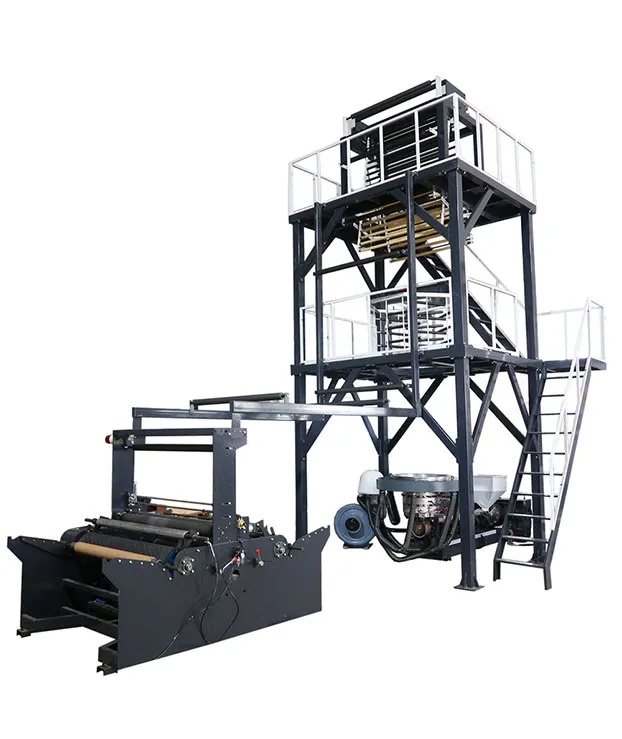
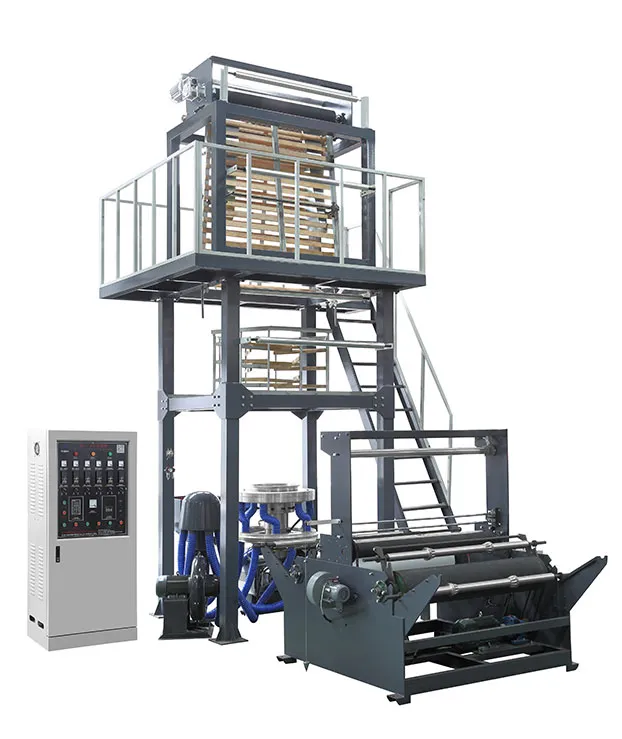
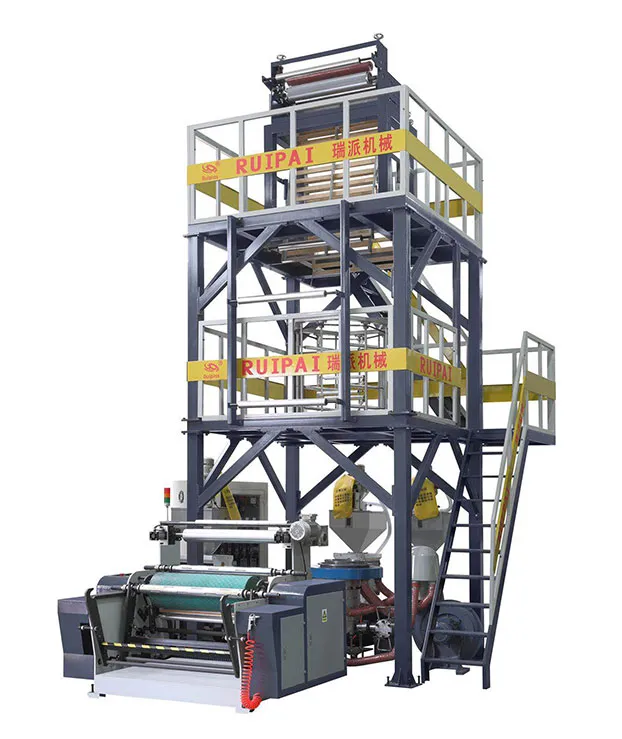
A Mono Layer Film Blowing Machine from RUIPAI is the platform. It uses a single screw, smart PLC controls, and optimized heat management. The PVA‑specific version adds tighter temperature zones and wear‑resistant materials to handle PVA’s narrow processing window. This guide covers what makes PVA different, how to set up the line for stable production, and the daily habits that keep water‑soluble film running without gel spots or thickness variation.
Multi-layer co-extrusion gets the headlines. But for water‑soluble packaging, single‑layer PVA film is the standard—and it demands a machine configured for its unique behavior.
Narrow temperature window. PVA degrades above 200°C, unlike LDPE which can run 180‑240°C. The RUIPAI screw and barrel use wear‑resisting alloy steel to maintain consistent melt temperatures within a tight range. Zone temperatures must be stable; a swing of 5‑10°C can degrade the resin, causing gels and black specks that ruin dissolvability.
Moisture sensitivity. PVA pellets absorb moisture from the air. Wet resin hydrolyzes during extrusion, creating bubbles and weak spots. The machine‘s screw design—with a 28:1 L/D ratio—delivers precise temperature control and uniform material distribution, accommodating PVA film thicknesses as low as 0.015 mm. Drying the resin before feeding is non‑negotiable.
Heat sealing without melting. The film must seal to itself at the packaging line, but the sealing temperature must stay low enough to avoid degrading the film. This places demands on film thickness uniformity—variation of even 0.002 mm changes seal strength. The RUIPAI mono layer line achieves precise thickness control through a high‑precision die head with adjustable gap (error ±0.01 mm), synchronized traction speed control, and intelligent air pressure regulation for stable bubble formation.
PVA film runs on the same machine as PE, but the parameters are different. Start here.
Extruder temperatures. For PVA, aim for 170‑195°C across the barrel, with the die slightly cooler to prevent degradation. The machine’s smart PLC control system provides precise temperature control, speed adjustment, and film thickness regulation, ensuring uniform product quality and high‑output performance. Monitor thermocouples closely; a drifting heater band is a common cause of sudden gel outbreaks.
Screw speed. PVA has higher melt viscosity than LDPE. Run the screw at 20‑40 RPM for a 45‑65 mm screw. Too fast, and shear heating pushes the melt over the degradation threshold. The 28:1 L/D ratio provides enough length for gradual melting without overheating.
Air ring and cooling. The bubble is more sensitive than PE. Set the air ring discharge slots evenly. If the bubble oscillates or shows uneven frost line, clean the air ring first. Uneven cooling is the most common cause of thickness variation in PVA film.
Haul‑off and winding. PVA film is stiffer than LDPE at the same thickness. Reduce nip pressure by 15‑20% compared to PE to avoid crushing the film. Winding tension should be lighter to prevent blocking (layers sticking together). The automated winding system reduces manual intervention and improves production stability.
Run a test roll before committing to a full shift.
Dissolution test. Cut a 10 cm × 10 cm sample. Place it in 20°C water (cold‑soluble grade) or 60°C water (hot‑water‑soluble grade). Time how long it takes to fully dissolve. PVA water‑soluble film typically dissolves within 10 seconds to 20 minutes, depending on water temperature and film thickness. If it takes longer, the melt temperature was too low or the film is too thick. If it dissolves too fast, the film may be too thin or the resin degraded.
Gel check. Hold the film up to a light. Black specks or translucent “fisheyes” indicate degraded polymer—either from running the extruder too hot or from contaminated raw material. The machine‘s high‑precision die head with adjustable gap (±0.01 mm error) helps minimize thickness variations, but gel spots require revisiting temperature control.
Seal test. Without a packaging line, use a hand sealer at the temperature recommended by your film supplier. The seal should hold firmly. If it peels easily, the film thickness isn‘t uniform—check die gap and air ring balance.
PVA water‑soluble film isn‘t a niche. It‘s the substrate for:
Laundry detergent pods. Liquid or powder detergent sealed in a dissolvable pouch. The film must hold the chemistry without leaking and dissolve completely in cold water.
Agrochemical packaging. Pesticide, fungicide, and fertilizer sachets that farmers drop directly into mixing tanks. The film dissolves and the chemical disperses—no handling, no measuring, no rinsed‑out sachets going to landfill.
Medical laundry bags. Soiled hospital linens are placed in water‑soluble bags that go directly into the washer. The bag dissolves, the linens are cleaned, and staff never touch contaminated material.
Embroidery backing. PVA film supports embroidery stitches, then washes away, leaving only the fabric.
The common denominator: the film must be uniform, pinhole‑free, and reliably dissolvable. That starts with a mono layer blown film machine that can hold tight tolerances over long runs. RUIPAI‘s equipment uses high‑quality alloy materials for wear resistance, ensuring long‑term stable operation while minimizing equipment failure rates.
A mono layer film blowing machine is simpler than multi-layer co‑extrusion. But simple doesn‘t mean no maintenance. These habits separate lines that run for years from lines that stop every week.
Clean the air ring daily. Dust and polymer fines build up in the air discharge slots. Uneven airflow creates gauge bands that show up as thick‑and‑thin streaks across the film. Blow out the ring with compressed air at the end of every shift.
Check the screen pack pressure. Rising pressure means the screen is clogging. Change it before it blows. For PVA, which can leave carbonized residue, change screens more often than for PE.
Wipe the collapsing frame rollers. Dust and residue on the rollers transfer to the film. For water‑soluble film going directly into consumer goods, contamination isn‘t cosmetic—it can create weak spots that leak. Clean with isopropyl alcohol daily.
Inspect the screw and barrel weekly. The wear‑resisting alloy steel screw handles PVA‘s abrasive nature better than standard steel, but even it wears. Check for scoring or edge rounding. RUIPAI recommends replacing the screw and barrel every 3‑5 years depending on usage frequency.
Monthly: drop the screen pack and inspect the die. Carbonized resin builds up on the die internal surfaces. This creates flow disturbances that show up as surface defects on the film. For lines running 24/7 during peak season, schedule a full die cleaning every 2,000 operating hours.
Q: What output can I expect from a mono layer PVA line? A: RUIPAI‘s mono layer machine typically achieves 200‑500 kg per hour, depending on film width, thickness, and screw configuration. PVA runs slower than LDPE due to its higher viscosity—expect output on the lower end of that range.
Q: Can I switch between PVA and PE on the same machine? A: Yes, but not without a thorough purge. PVA residue will degrade when running PE at higher temperatures, creating gels. Run a purge compound between material changes. The flexible configuration of RUIPAI‘s mono layer line allows customizing screws, die heads, and accessories to accommodate various plastic raw materials and production requirements.
Q: How often should I calibrate temperature sensors? A: Every 3 months, or immediately if you see unexplained gel formation. PVA’s narrow window makes thermocouple drift a critical failure mode. The machine‘s intelligent temperature control system reduces this risk, but periodic verification with a pyrometer is still essential.
Q: What‘s the real‑world film thickness range for PVA? A: For laundry pods, 35‑50 µm. For agrochemical sachets, 25‑40 µm. For embroidery backing, 20‑30 µm. RUIPAI‘s PVA machine can produce thickness as low as 0.015 mm (15 µm).
When a converter needs to enter the water‑soluble packaging market without over‑investing in complex multi‑layer lines, the Mono Layer Film Blowing Machine from RUIPAI is the proven entry point. The PVA‑specific configuration includes a single screw with a 28:1 L/D ratio for gradual melting, a high‑precision die head with adjustable gap (±0.01 mm error), and smart PLC control for precise temperature and speed management. Output ranges 200‑500 kg/h, film width up to 2000 mm, thickness down to 0.015 mm. Applications cover detergent pods, agrochemical sachets, medical laundry bags, and embroidery backing. The company provides on‑site installation, operator training (proficiency within 3‑5 days), and a service life of 10‑15 years with proper maintenance.
For a production manager needing to meet the growing demand for dissolvable packaging, the combination of low entry cost, stable output, and simple operation makes the RUIPAI mono layer line the practical choice.
→ Request a quote from RUIPAI for the PVA Water‑Soluble Monolayer Film Blowing Machine — Share your target film thickness, width, daily output requirement, and PVA grade (cold‑ or hot‑water‑soluble). Their technical team will recommend the right screw and die configuration for your water‑soluble film application.
Environmentally friendly materials
Integrated production lines
Maximising your return on investment
GET A QUOTE


 English
 Español